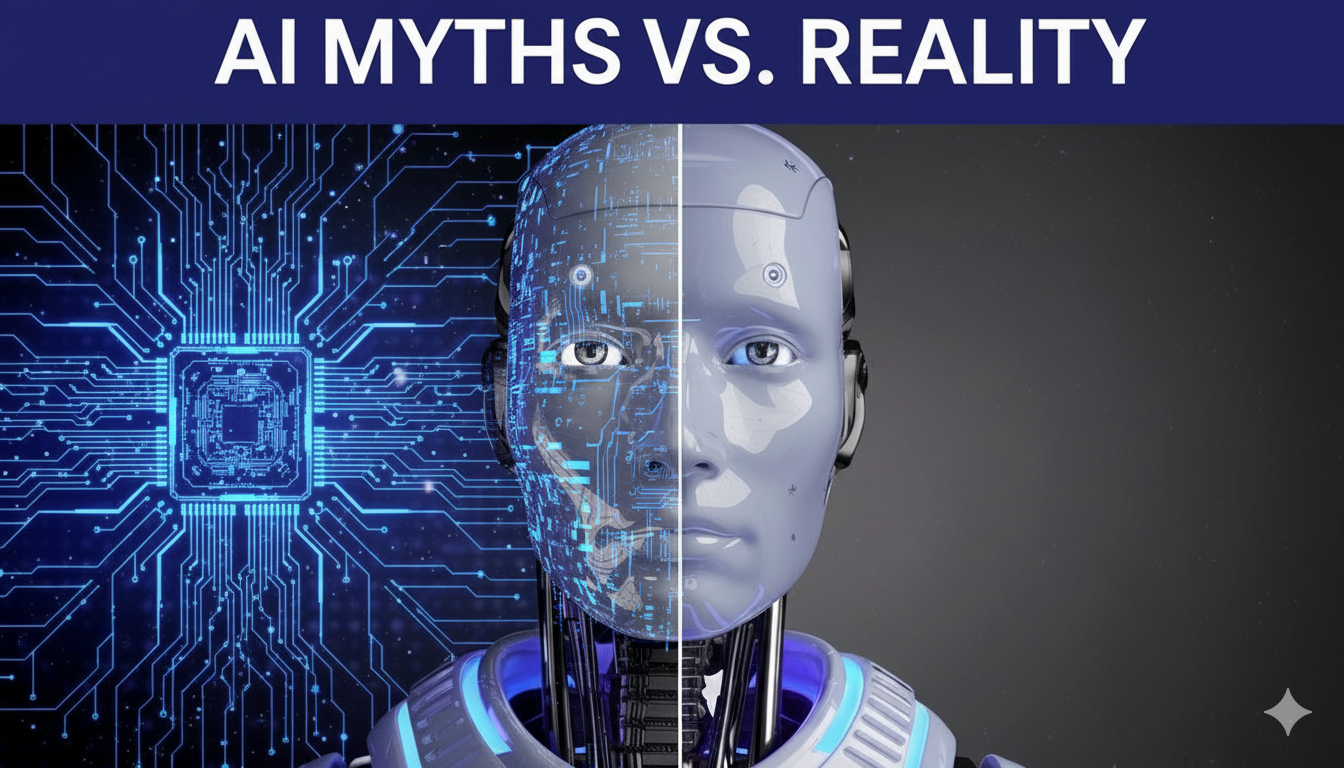
AI in Clinical Trials is reshaping the future of medical research. For decades, clinical studies have been the heartbeat of medical progress, yet the process has remained slow, expensive, and buried in paperwork. Today, Artificial Intelligence (AI) is stepping in to transform how we design, recruit, and manage studies with greater accuracy and speed.
But with this transformation comes a swirl of myths. Many worry that AI will “replace humans,” make trials less personal, or even introduce bias. The truth? AI isn’t replacing the human touch; it’s helping the people behind the science do their jobs better.
Let’s break down the most common myths and uncover the real story behind AI in clinical research.
Myth #1: “AI will take over and replace human researchers.”
Reality: AI isn’t taking over, it’s teaming up.
Think of AI as a highly skilled assistant, not a replacement for human judgment. It helps researchers process massive volumes of data faster, identify patterns, and flag potential risks, but the final decisions still come from human experts.
At one mid-sized oncology research site in Boston, the team was struggling to keep up with eligibility checks for new participants, reviewing hundreds of EHRs (Electronic Health Records) each week. After integrating an AI-based pre-screening tool, what used to take three days now takes just a few hours.
Did the system replace the staff? Not at all. It freed them to focus on conversations with patients, physician outreach, and protocol planning, the things that require human empathy and understanding.
AI brings efficiency; people bring context and compassion. Together, they form the perfect partnership.
Myth #2: “AI makes clinical trials less personal.”
Reality: It actually helps make trials more patient-centered.
One of the biggest challenges in clinical research has always been patient recruitment. Many participants drop out not because of the science, but because they feel disconnected or overwhelmed.
AI-driven tools can change that. They help match patients to trials that truly fit their medical and personal needs, analyze social determinants (like transportation or distance to sites), and even personalize communication timing, ensuring that participants feel understood, not just enrolled.
Imagine Sarah, a 52-year-old living in rural Ohio, who struggled to find a trial for her rare autoimmune condition. Traditional outreach never reached her town. But when a local site started using an AI-driven recruitment platform, Sarah got a text about a study nearby that matched her health profile. She joined and later said it felt like “someone finally saw me.”
That’s what AI can do: make research more human by helping us see every individual who might benefit.
Myth #3: “AI introduces more bias into clinical research.”
Reality: AI can actually reduce bias when used responsibly.
It’s true that if AI systems are trained on biased data, they can perpetuate inequalities. But the clinical research community is already addressing this by setting strict data standards and transparency protocols.
Today, AI models used in healthcare must undergo validation, bias testing, and regulatory oversight. Many platforms, including DecenTrialz and others leading the movement, prioritize ethical AI frameworks aligned with HIPAA, GDPR, and FDA guidance.
Used properly, AI can highlight underrepresented populations, uncover gaps in recruitment diversity, and help ensure that trial outcomes reflect everyone, not just the majority group.
In other words, AI isn’t the problem; it’s part of the solution.
Myth #4: “AI is too complex and expensive for smaller sites.”
Reality: Cloud-based and modular AI tools are now more accessible than ever.
A few years ago, AI systems were costly and required in-house data teams. But today, SaaS-based AI platforms can integrate directly with existing clinical trial management systems (CTMS), electronic data capture (EDC) tools, or even spreadsheets.
At a small research site in Texas, a team of five staff members struggled to track follow-ups and reminders for participants. By adopting a lightweight AI assistant that automated communication, they reduced missed appointments by 40 percent without hiring extra help or buying complex software.
Small sites are discovering that AI doesn’t have to mean “high tech.” It can mean “smart tech that fits your workflow.”
Myth #5: “AI can predict everything about a trial.”
Reality: AI is powerful, but it’s not magic.
AI helps forecast potential recruitment bottlenecks, estimate patient drop-off rates, and even detect early safety signals. But it can’t guarantee outcomes.
Just as weather forecasts rely on models, so does AI in clinical trials. The more quality data it has, the better the predictions. But unexpected human behaviors, regulatory changes, or new medical discoveries can still shift the picture.
Think of AI as a GPS for research. It helps you navigate smarter, but the driver’s still in control.
Why the “Reality” Matters
Every myth about AI usually stems from one thing: fear of change. But clinical research has always evolved. From paper CRFs to eConsent, from local data silos to global cloud sharing, every leap has made trials safer, faster, and more inclusive.
AI is simply the next chapter. It’s about working smarter, not harder. It’s about giving researchers more time for science and patients more chances at hope.
And when implemented transparently, ethically, and collaboratively, AI has the potential to make clinical trials more inclusive, efficient, and humane than ever before.
The Future of AI in Trials: Collaboration, Not Replacement
The future isn’t “AI vs Humans.” It’s “AI + Humans.”
Platforms like DecenTrialz are helping make that collaboration real, connecting research teams, sites, and participants seamlessly. From matching diverse patients to the right trials to automating data capture and monitoring, the goal isn’t to replace people; it’s to empower them.
When technology supports empathy, innovation, and inclusion, everyone wins, sponsors, sites, and most importantly, patients.
AI in clinical trials isn’t a myth; it’s a movement.
The real story isn’t about algorithms taking over, but about people working smarter, faster, and more compassionately with AI by their side.
As Sarah’s story in Ohio reminds us, the future of research is both intelligent and human. And that’s the truth we can all get behind.