Blog

  • Understanding FDA Diversity Guidance for Clinical Trials

    Understanding FDA Diversity Guidance for Clinical Trials

    FDA diversity guidance is redefining how the U.S. approaches clinical research and inclusion. A few years ago, a promising heart medication entered late-stage testing. The results were strong until post-market data revealed that it worked differently among certain racial groups. It wasn’t that the drug failed; it was that the trial hadn’t fully represented the people it aimed to help.

    That discovery wasn’t an isolated event. Across decades, underrepresentation in clinical research has led to knowledge gaps in how medicines perform across diverse populations. For many communities, Black, Hispanic, Indigenous, Asian American, rural, and older adults, clinical trials often felt distant, inaccessible, or irrelevant.

    To change that narrative, the U.S. Food and Drug Administration (FDA) introduced new guidance designed to make diversity not an afterthought but a standard. The FDA’s Diversity Action Plan marks a major step toward inclusive research that reflects the reality of modern America.

    What the FDA’s Diversity Action Plan Means

    The new FDA diversity guidance focuses on one clear goal: ensuring that clinical trials, especially late-stage or Phase 3 trials, accurately represent the patients who will use the medical products being studied.

    Under this guidance, sponsors of most pivotal clinical studies must now develop and submit a Diversity Action Plan. This plan outlines how sponsors intend to enroll participants who reflect the demographic makeup of the people most affected by the disease or condition under study.

    The FDA explains that such plans will help improve both trial enrollment diversity and the scientific validity of results. In essence, the guidance moves the conversation from “why diversity matters” to “how diversity will be achieved.”

    Read the full details in the FDA’s draft guidance on diversity in clinical trials.

    Key Requirements for Sponsors

    The FDA’s Diversity Action Plan isn’t just a formality; it’s a blueprint for accountability. Sponsors will be required to include several key components.

    1. Enrollment Targets by Race and Ethnicity

    Sponsors must set specific, data-informed goals for participant representation. These targets should align with the population most affected by the condition and be justified with epidemiological data.

    2. Community Engagement Strategies

    Recruitment plans must go beyond standard outreach. The FDA emphasizes partnerships with local clinics, community leaders, and advocacy groups, especially in underrepresented or rural areas, to build trust and awareness about ongoing trials.

    3. Reducing Participant Burden

    Recognizing that distance, cost, and time often limit participation, the FDA encourages practical solutions such as:

    • Remote data collection or hybrid trial designs
    • Transportation and childcare support
    • Simplified consent and follow-up processes

    These steps help remove barriers that have historically excluded diverse participants.

    4. Ongoing Monitoring and Updates

    Diversity isn’t a one-time goal. Sponsors should plan for continuous monitoring and adjust outreach or site strategies if enrollment falls short of projections.

    Timeline and Compliance

    The new rule is expected to take effect 180 days after the final guidance is published in 2025. Once in force, it will apply to most late-stage (Phase 3) and pivotal trials for drugs, biologics, and medical devices that require FDA approval or clearance.

    This gives sponsors and research organizations time to prepare by reviewing their recruitment practices, strengthening partnerships, and rethinking how trials can better serve the communities that rely on them.

    Why Diversity Improves Outcomes

    Beyond compliance, clinical trial diversity leads to better science and more equitable care. Here’s why it matters:

    • Better Data Accuracy: Drugs can metabolize differently across genetic backgrounds, age groups, and sexes. A diverse trial population helps uncover these differences early.
    • Increased Patient Trust: When communities see themselves represented in research, they’re more likely to participate and trust medical recommendations.
    • More Effective Treatments: Inclusive research ensures that therapies are designed and dosed appropriately for all who might use them, not just the majority group that historically dominates study data.
    • Public Health Equity: Diversity in trials brings us closer to achieving fair access to life-changing medical innovation for everyone.

    Practical Tips for Sponsors and Sites

    While the guidance provides a framework, proactive steps can make all the difference. Here are several ways sponsors and sites can prepare now:

    1. Assess Current Demographics: Review existing trial data to identify representation gaps.
    2. Build Local Partnerships: Collaborate with hospitals, churches, and patient advocacy groups serving underrepresented communities.
    3. Simplify Enrollment: Make trial materials easy to understand, avoid jargon, and translate materials when needed.
    4. Offer Supportive Logistics: Reimburse travel costs, offer flexible visit times, or use telemedicine to reduce burden.
    5. Train Staff for Cultural Competence: Equip study teams to communicate effectively and sensitively with participants from all backgrounds.
    6. Leverage Data Tools: Use digital platforms to analyze diversity metrics in real time and adjust recruitment strategies dynamically.

    How Technology Can Help

    While policy sets the direction, technology makes progress possible.
    At Decentrialz, our focus is on empowering research teams with tools and insights that bring diverse voices into the heart of clinical discovery.

    A Future Built on Representation

    The FDA’s Diversity Action Plan is more than a regulatory update; it’s a cultural shift in how the industry defines ethical, effective research.

    Every patient deserves to see themselves reflected in science. Every therapy deserves to be tested in the world it’s meant to serve. By building bridges between communities and clinical research, we can ensure that the next generation of treatments doesn’t just work—it works for everyone.

    And that’s the kind of progress worth striving for.

  • Clinical Trial Timeline Delays: 7 Proven Ways Sponsors Can Fix Them Faster

    Clinical Trial Timeline Delays: 7 Proven Ways Sponsors Can Fix Them Faster

    Clinical trial timeline delays continue to challenge sponsors across therapeutic areas, phases, and geographies, despite stronger planning tools, experienced CRO partners, and increased investment in recruitment. Most sponsors do not underestimate timelines or ignore risk. They plan carefully, build contingencies, and hold teams accountable.

    Yet delays persist.

    The reason is simple but uncomfortable. Timelines usually break early, long before delays appear on enrollment reports. By the time a study is officially behind, the underlying causes are already embedded in startup decisions, feasibility assumptions, and early recruitment execution.

    Learn how structured pre-screening improves referral readiness and reduces avoidable enrollment delays.

    What Are Clinical Trial Timeline Delays?

    Clinical trial timeline delays occur when planned trial milestones, such as startup completion, first patient in, enrollment completion, or database lock, extend beyond the original timeline.

    While timelines appear structured during planning, execution introduces variability at every stage.

    The average timeline for a clinical trial, particularly Phase II and Phase III studies, often includes:

    • Several months of startup and site activation
    • A long enrollment period that frequently exceeds projections
    • Timeline extensions driven by recruitment and screening challenges

    What sponsors often experience as enrollment delays are actually the downstream effects of earlier uncertainty. These delays begin long before enrollment metrics officially fall behind.

    Why Clinical Trial Timeline Delays Still Happen

    Limited Early Funnel Visibility

    Sponsors often lack early insight into how many potential participants enter the recruitment funnel, how many qualify, and where drop-offs occur. Without early visibility, risks remain hidden until enrollment slows.

    Inaccurate Feasibility Assumptions

    Feasibility assessments frequently rely on site-reported estimates that may be optimistic, outdated, or based on limited data. When assumptions fail, timelines suffer before recruitment even begins.

    Slow Pre-Screening Processes

    Manual or delayed pre-screening reduces participant throughput. Screening backlogs build quietly and later appear as enrollment delays.

    Inconsistent Referral Quality

    Referrals that do not align with protocol criteria increase screen failure rates. This consumes site capacity without increasing enrollment and extends timelines unnecessarily.

    Communication Gaps During Clinical Trial Startup

    During clinical trial startup, information flow between sponsors, CROs, and sites is often delayed or fragmented. Sponsors receive lagging indicators instead of early signals, limiting timely intervention.

    Clear sponsor oversight, aligned with FDA expectations for trial conduct and oversight, depends on timely visibility into recruitment and screening performance rather than delayed summary reporting.

    How Clinical Trial Startup Issues Compound Delays

    Clinical trial startup decisions shape enrollment performance long after sites activate.

    Common contributors to clinical trial timeline delays during startup include:

    • Sites opening without validated patient flow
    • Recruitment assumptions finalized too late
    • Screening capacity not assessed before enrollment begins

    When these gaps exist, bottlenecks appear only after activation. At that point, fixes require protocol amendments, additional sites, or timeline extensions. This explains why many clinical trial startups miss early milestones even with experienced teams.

    What Actually Helps Accelerate Clinical Trial Timelines

    Real-Time Recruitment Funnel Visibility

    Sponsors who see funnel performance early, including lead volume, eligibility alignment, and drop-off points, can intervene before delays compound.

    Well-designed clinical trial recruitment workflows give sponsors earlier insight into eligibility alignment and referral quality, allowing adjustments before timelines drift.

    Structured and Faster Pre-Screening

    Standardized pre-screening improves consistency, protects site capacity, and shortens time to enrollment. Faster screening also reduces participant disengagement.

    Data-Driven Readiness Instead of Assumptions

    Replacing assumptions with measurable readiness indicators allows sponsors to identify risk early and prioritize corrective actions.

    Better Alignment Between Sponsors, CROs, and Sites

    Shared visibility across stakeholders enables faster decisions and earlier course corrections, keeping timelines stable.

    Earlier Feasibility Validation During Clinical Trial Startup

    Validating patient access and screening capacity during clinical trial startup prevents downstream enrollment surprises. Early feasibility validation helps sponsors adjust site strategy before timelines are locked.

    Reduced Screening Burden at the Site Level

    Cleaner referrals and pre-qualified participants reduce the administrative and screening workload on sites. Lower site burden improves responsiveness, screening speed, and overall enrollment efficiency.

    Earlier Risk Detection Instead of Late-Stage Pressure

    Identifying risk early allows sponsors to correct course before delays escalate. Earlier risk detection replaces late-stage enrollment pressure with proactive timeline control and more predictable execution.

    The Role of Modern Recruitment Technology

    Modern recruitment technology helps sponsors accelerate clinical trial timelines by reducing uncertainty rather than increasing pressure.

    At a high level, effective platforms allow sponsors to:

    • Monitor recruitment funnel health in near real time
    • Identify screening and referral issues early
    • Reduce administrative and screening burden on sites
    • Make earlier, more confident operational decisions

    The benefit is clarity. Seeing risk early allows sponsors to act before timelines slip.

    How Sponsors Can Reduce Clinical Trial Timeline Delays

    Reducing clinical trial timeline delays requires sponsors to address risk earlier in the trial lifecycle rather than reacting once enrollment targets are missed.

    Sponsors aiming to reduce clinical trial timeline delays should focus on early operational discipline rather than late-stage escalation.

    Modern sponsor-focused trial operations emphasize early clarity and structured screening rather than reactive enrollment pressure once delays are already visible.

    Practical steps include:

    • Validating feasibility using real-world patient access data
    • Implementing structured pre-screening before site activation
    • Reviewing funnel performance weekly instead of monthly
    • Aligning referral criteria closely with protocol eligibility
    • Addressing site burden proactively

    These actions shift control upstream, where changes are faster and less disruptive.

    How DecenTrialz Supports Faster Trial Timelines

    DecenTrialz supports sponsors by providing real-time recruitment funnel visibility and RN-led pre-screening that improves referral quality. This enables earlier risk detection, cleaner referrals, and more predictable enrollment progress without increasing operational burden.

    The Takeaway for Sponsors

    Clinical trial timeline delays are rarely caused by poor effort or slow execution. They occur because uncertainty goes unnoticed early during feasibility, startup, and initial recruitment, when timelines are most vulnerable.

    When clinical trial timeline delays are addressed upstream, sponsors gain greater control over enrollment predictability and site performance.

    Sponsors who fix delays fastest focus on early clarity, structured screening, and shared visibility. The result is more predictable timelines, better site performance, and stronger trial control across the lifecycle.

  • FDA Finalizes Decentralized Trial Guidance: Key Takeaways for Sponsors & Sites

    FDA Finalizes Decentralized Trial Guidance: Key Takeaways for Sponsors & Sites

    A Trial That Broke Boundaries

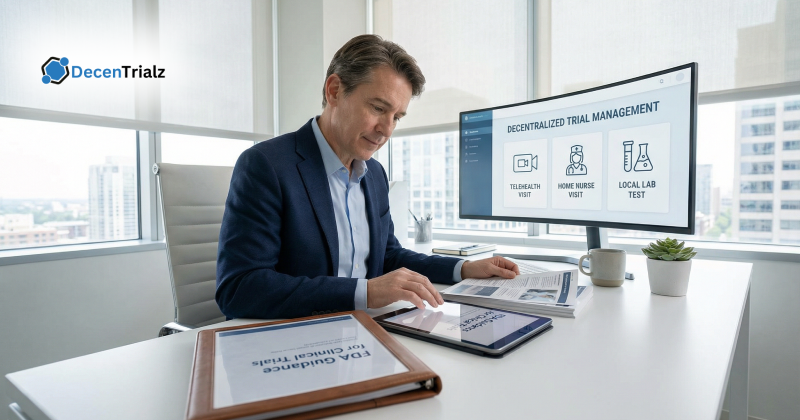
    FDA guidance on decentralized clinical trials is reshaping how research is designed, monitored, and conducted across the United States. For instance, consider a late-stage heart failure study that decided to combine home nursing visits, telehealth check-ins, and local lab testing to make participation easier for patients. The idea was innovative, but within months, the research team realized new challenges had emerged. Local clinicians weren’t fully captured in the site logs, some assessments were split between virtual and in-person visits, and documentation of oversight became inconsistent.

    That scenario is increasingly common as sponsors and sites embrace hybrid and remote elements in trials. It also helps explain why the FDA recently finalized new guidance on decentralized elements in clinical research. This new direction recognizes the hybrid model and provides a roadmap for adapting to it.

    The guidance, titled Conducting Clinical Trials With Decentralized Elements – Guidance for Industry, Investigators, and Other Interested Parties, was issued in September 2024. It reflects a shift from labeling a trial as a “DCT” (decentralized clinical trial) to recognizing that many trials simply include remote or local elements.

    In this post, we’ll walk through what the guidance means for sponsors and sites, major changes from the draft, and practical actions you can take now to align your trial programs.

    What the FDA Guidance Means: Decentralized Elements vs “DCTs”

    The new FDA guidance addresses decentralized clinical trials, hybrid trials, and the use of remote or local-based trial elements. But it doesn’t force a binary label on trials. Instead, it clarifies how the FDA views trials that include activities at locations other than traditional clinical trial sites, such as telehealth visits, in-home visits, and local labs.

    The guidance provides recommendations for sponsors, investigators, and other interested parties regarding the implementation of decentralized elements in clinical trials. It is not a regulation but reflects the FDA’s current thinking on how to conduct trials with remote or local components while maintaining safety, data integrity, and regulatory oversight.

    For sponsors and sites, the takeaway is clear: you don’t have to call your trial a “DCT” to fall under this guidance, but if you include remote or local components, you should design, document, and monitor accordingly.

    To read the full text, visit the FDA’s Final Guidance on Conducting Clinical Trials With Decentralized Elements on the official FDA website.

    Major Changes from the Draft – What’s New

    Here are some of the key changes that differentiate the final guidance from the draft version:

    • Removal of the “task log” requirement for local HCPs: The draft required a detailed log of local healthcare providers performing trial-related tasks. The final guidance removes that explicit requirement, clarifying that local HCPs are not necessarily trial personnel or sub-investigators when operating within their regular scope and performing tasks that do not require detailed knowledge of protocol or investigational product.
    • Clarified oversight and delegation roles: Investigators must still ensure that local HCPs or other trial-related participants are supervised and that data coming in from remote or local sources is reviewed. The guidance provides clearer examples of how to do so and how to manage data variability.
    • Data variability, remote visits, and flexibility: The guidance emphasizes that remote visits, local labs, digital health technologies, and in-home assessments are acceptable. Sponsors must address risks of variability, define in their protocols where activities occur (remote, site, or local HCP), and outline how they mitigate bias.
    • Physical location for inspection access: The FDA continues to require that a physical location be identified where trial records can be inspected (whether paper or electronic) and where trial personnel can be interviewed in person or remotely. The final guidance offers more flexibility around how that location is identified.

    These adjustments reflect both industry feedback and evolving realities of hybrid and remote trial conduct.

    What Sponsors and Sites Should Do to Comply

    While the FDA guidance does not create new legally binding obligations, it sets expectations. Here are actions sponsors, CROs, and sites should consider to align with the guidance:

    1. Review your protocol design
      • Clearly identify which trial-related activities will be performed at a traditional site, which remotely (telehealth or home), and which via a local HCP or local laboratory.
      • For each activity, define who performs it, where it occurs, how data is captured, and how you will mitigate variability.
    2. Clarify roles, delegation, and oversight
      • Document how local HCPs will be engaged, what training they receive, how you will supervise their activities, and what documentation will be kept.
      • Even when “task logs” aren’t required, ensure you keep records of local HCP names, dates, and tasks assigned.
      • Ensure investigators are clear about their oversight responsibilities and that any delegated activities are documented.
    3. Ensure data integrity and monitoring
      • For remote or home assessments or local lab visits, assess whether variability might be introduced (for example, home spirometry vs clinical spirometry) and build mitigation strategies such as training or video supervision.
      • Draft a monitoring and oversight plan that covers decentralized elements, secure data transmission, and clarity of the origin of data (site, home, local lab).
    4. Identify inspection-ready location and access
      • Designate a physical location or a clearly defined alternative where records are maintained and accessible to the FDA or other regulatory inspection bodies.
      • Ensure your records system flags location type (remote vs site) and the person performing the activity.
    5. Update participant materials and logistics
      • If the trial involves remote visits or home health, ensure informed consent and site materials reflect this.
      • Consider technology access, local lab access, participant support such as shipping devices, digital health tools, and telehealth state-licensing implications.
    6. Train your team and sites
      • Sponsors and CROs should train site staff, local providers, and remote personnel on the trial’s hybrid or decentralized elements, oversight model, and documentation requirements.
      • Sites should review standard operating procedures (SOPs) to include remote or local visit workflows, telehealth check-ins, local lab integration, and participant logistics.

    Why This Matters: Access, Efficiency, and Participant Experience

    Embracing remote and local logistics isn’t just about convenience. It’s about participation, access, and modernization.

    According to the guidance and industry analysis:

    • Trials with decentralized elements may reach participants who cannot easily travel to large central sites, broadening geographic and demographic access.
    • Hybrid and remote-capable trials can improve retention, reduce participant burden, and streamline operations, creating benefits for sponsors, CROs, and participants.
    • By focusing on remote and local visit models, sponsors may better meet diversity, equity, and access goals and enhance the real-world relevance of results.
    • For sites, adapting to decentralized elements means staying competitive, attracting more participants, and partnering in next-generation trial designs.

    To learn more about how decentralized models are reshaping research, check out our earlier DecenTrialz blog What Are Decentralized Clinical Trials — And Why Sponsors Should Care?

    How Technology and Platforms Can Support Your Strategy

    While the FDA guidance frames expectations, the practical execution often comes down to systems and platforms. At DecenTrialz, we emphasize how modern trial platforms can:

    • Enable remote visit scheduling and telehealth integration
    • Track local lab and home visit workflows
    • Flag delegate roles, location types, and visit origins (site, home, or local clinic)
    • Support eConsent, electronic data capture (EDC), and audit-ready record-keeping aligned with regulatory requirements

    These capabilities are not about claiming regulatory status. They are about facilitating modern trial conduct and building forward-looking, participant-centered trial models.

    A Forward Look for Sponsors and Sites

    The FDA’s final guidance on decentralized elements is less about revolution and more about evolution. It affirms that remote, home-based, and local lab visits are part of the trial future while emphasizing the need for design, oversight, documentation, and participant-centered logistics.

    For sponsors and sites, the message is clear. Hybrid and remote elements are increasingly mainstream, but they come with design and oversight expectations. By getting ahead of these changes, you can improve access, enrich participant diversity, enhance retention, and reduce burden while aligning with regulatory best practices.

  • AI in Clinical Trials Will Not Replace Recruiters, Sponsors Who Use It Recruit Faster

    AI in Clinical Trials Will Not Replace Recruiters, Sponsors Who Use It Recruit Faster

    AI in clinical trials is increasingly shaping how sponsors approach recruitment planning, execution, and oversight. Enrollment timelines are under pressure, protocols are more complex, and recruitment teams are expected to deliver consistent outcomes across multiple sites and regions. At the same time, concerns around automation and workforce displacement continue to surface across the industry.

    For sponsors, this framing misses the operational reality.

    AI does not replace recruiters. When applied thoughtfully, AI strengthens recruitment operations by improving early stage decision making, reducing manual workload, and creating more structured screening pathways. Sponsors who align AI capabilities with experienced recruitment teams move faster, operate with greater consistency, and reduce avoidable enrollment friction without compromising accountability or control.

    Learn How DecenTrialz Supports Sponsors in Patient Recruitment

    Why Human Recruiters Still Matter in Clinical Trials

    Despite the growing use of AI in clinical trials, recruitment success continues to depend on human expertise. Certain responsibilities require judgment, coordination, and oversight that cannot be fully automated without introducing risk.

    Human recruiters remain essential because clinical trial enrollment relies on:

    • Clinical interpretation: Applying protocol criteria in real world scenarios where eligibility is rarely a simple yes or no
    • Participant communication: Explaining study requirements, timelines, and next steps in a way that supports informed participation
    • Site coordination: Aligning referrals with site availability, investigator preferences, and operational capacity
    • Decision accountability: Managing exceptions, edge cases, and sponsor priorities as enrollment conditions change

    AI can support these activities, but it does not replace responsibility. Sponsors achieve stronger outcomes when recruiters remain decision owners, supported by systems that reduce noise and repetitive work.

    Where the Use of AI in Clinical Trials Delivers Real Impact

    The most effective use of AI in clinical trials focuses on areas where manual processes slow recruitment teams down rather than where experience adds value.

    In recruitment workflows, AI delivers impact by:

    • Triaging incoming leads to organize large volumes of participant interest into clear priority groups
    • Identifying exclusions early to prevent unnecessary downstream screening
    • Validating protocol alignment by flagging potential conflicts with study requirements
    • Reducing repetitive review that consumes recruiter and coordinator time
    • Ensuring screening consistency across sites, regions, and screening stages

    For sponsors, these improvements translate into smoother site handoffs, fewer late stage issues, and clearer visibility into enrollment progress.

    AI and Machine Learning in Clinical Trials: From Support to Scale

    AI and machine learning in clinical trials extend beyond static automation. While rules based systems follow predefined logic, learning based systems adapt as more screening data becomes available.

    In recruitment operations, machine learning enables systems to:

    • Improve eligibility signal accuracy based on historical screening outcomes
    • Refine referral quality as site responses are incorporated
    • Support higher enrollment volumes without a proportional increase in manual effort

    This distinction matters for sponsors managing multi site or multi study portfolios. Machine learning allows recruitment teams to scale while maintaining structure, oversight, and consistency.

    Agentic and Generative AI in Clinical Trials: What Sponsors Should Know

    Interest in agentic AI in clinical trials and generative AI in clinical trials is growing, but their role in recruitment is often misunderstood.

    At a practical level:

    • Agentic AI supports task coordination, such as sequencing screening steps, tracking status changes, and escalating cases that require human review
    • Generative AI assists with summarization, operational insights, and internal reporting to help teams interpret information more efficiently

    These technologies do not make eligibility decisions or replace human responsibility. Their value lies in improving workflow efficiency and operational visibility while maintaining governance and human oversight.

    AI Triage as a Force Multiplier for Recruitment Teams

    AI triage plays a central role in improving recruitment efficiency without changing decision ownership.

    By structuring and prioritizing leads early, AI triage enables recruitment teams to:

    • Focus first on participants with stronger protocol alignment
    • Reduce unnecessary downstream screening activity
    • Improve recruiter throughput without increasing staffing pressure
    • Deliver more prepared referrals to sites

    For sponsors, this results in steadier enrollment pacing, better use of site capacity, and fewer disruptions caused by late stage exclusions.

    What Sponsors Gain from AI Enabled Recruitment

    When AI is integrated strategically into recruitment operations, sponsors gain clear operational advantages:

    • Faster enrollment timelines driven by earlier screening clarity
    • Stronger protocol adherence through early mismatch detection
    • Reduced administrative burden on sites, supporting better collaboration
    • More predictable recruitment performance across studies and regions

    Ongoing industry discussion around the AI in clinical trials market size 2025 reflects increasing adoption driven by operational necessity rather than experimentation.

    How RN-Led, AI-Supported Pre-Screening Works at DecenTrialz

    DecenTrialz conducts centralized pre-screening through registered nurse–led workflows, supported by AI-based participant matching. AI assists in organizing and prioritizing participants based on study-specific criteria, while registered nurses conduct structured pre-screening interactions to confirm eligibility signals and readiness for referral.

    Research sites and sponsors receive only pre-screened participants for further evaluation and enrollment decisions. This model improves recruitment efficiency and consistency while preserving site authority over final eligibility and study enrollment.

    Final Thoughts for Sponsors

    AI will not replace recruiters in clinical trials. Sponsors who use AI strategically recruit faster, operate with greater consistency, and reduce avoidable inefficiencies across enrollment workflows.

    The advantage lies in using AI to remove friction and improve early stage clarity so recruitment teams can focus on decisions that require experience and accountability. Sponsors who adopt this approach are better positioned to meet enrollment goals with fewer surprises and stronger operational confidence.

    See How DecenTrialz Improves Referral Readiness for Research Sites

  • Digital Patient Recruitment: Leveraging Social Media to Accelerate Enrollment

    Digital Patient Recruitment: Leveraging Social Media to Accelerate Enrollment

    Digital recruitment is changing how clinical trials find and engage participants. Imagine a Phase III asthma study that starts with high hopes but struggles to enroll after six months. Ads in local clinics bring few leads, and email outreach barely moves the needle. For many sponsors and sites, this scenario sounds familiar.

    Studies show that around 80% or more of clinical trials fail to meet their initial enrollment timelines (NIH). That statistic makes one thing clear: traditional recruitment methods need a digital boost.

    By using social media marketing and patient outreach online, research teams can reach new participants faster, broaden diversity, and lower recruitment costs while maintaining ethical and compliant practices.

    Why Social Media Marketing Works for Clinical Trials?

    Social media is not magic, but it offers clear advantages for modern clinical research.

    1. Reach patients where they already spend time
      Online forums, advocacy group pages, and community channels provide opportunities to create awareness by sharing educational content about ongoing clinical trials. By participating in these discussions and posting valuable information, we can expand awareness far beyond local regions.
    2. Awareness through digital platforms
      Awareness of clinical trials can spread more effectively through social media networks, online forums, and patient advocacy channels. These spaces help people learn about ongoing studies that may be relevant to them based on their condition, age, or location — without any invasive “targeting” or direct promotion.
    3. Speed and reach advantage
      Research shows that social media–based awareness initiatives can support faster participant engagement and improve the diversity of outreach compared to traditional advertising. At the same time, nearly 86% of trials still miss their enrollment timelines using conventional outreach methods (NIH).
      By using online channels responsibly, awareness efforts can reach communities that may otherwise remain unaware of clinical opportunities.

    In short, digital awareness and patient outreach online help accelerate clinical trial enrollment while improving efficiency and diversity.

    Real-World Wins in Digital Patient Outreach

    Consider a site network that struggled to recruit men aged 50 and older for a heart-failure study. They shifted their approach to online community groups and shared short testimonial videos from past participants. Within three months, they reached 70% of their enrollment target at nearly half the cost of their print campaign.

    Another example: a rare-disease trial that had recruited only 30 participants in two years saw the same number enroll in six months after adding digital ads and community partnerships.

    These results reflect an ongoing industry shift, digital platforms are now integral to patient engagement and outreach (MESM Resource).

    Best Practices: Doing Digital Recruitment Right

    Digital outreach brings opportunity and responsibility. Here’s how sponsors, CROs, and sites can build strong, compliant recruitment campaigns.

    1. Secure IRB approval for recruitment materials
    Before launching any awareness activity, ensure it’s reviewed and approved by your Institutional Review Board (IRB). All messages, claims, and visuals should reflect accurate, ethically sound information.

    2. Protect privacy and personal data
    Avoid collecting sensitive health data directly through online forms. Use secure landing pages and obtain consent before follow-up contact. Be transparent about how personal information will be handled.

    3. Prioritize cultural sensitivity
    Outreach works best when it resonates with people’s experiences. Translate content where needed and adapt imagery, tone, and language to reflect your target communities.

    4. Integrate digital and traditional recruitment
    Digital Awareness efforts work best when combined with traditional site-level strategies. Share digital leads with site staff quickly to maintain engagement and optimize screening.

    5. Partner with patient communities
    Collaborate with advocacy groups, online support forums, and health influencers. Authentic relationships help establish credibility that online promotions alone can’t achieve.

    6. Keep calls to action simple and clear
    Explain eligibility, the purpose of the study, and next steps clearly. Make it easy for interested participants to learn more or reach out to the study team.

    What It Means for Sites and Sponsors?

    Adopting digital recruitment changes how teams think about outreach.

    • Recruitment can extend across regions and demographics instead of staying local.
    • Sites receive better-qualified leads and can spend more time on high-value screening.
    • Sponsors gain data-driven insight into which channels deliver results.
    • Diversity improves as outreach reaches underrepresented patient populations.

    However, digital success depends on coordination. Leads must flow smoothly into site workflows, and follow-up should be timely to maintain participant interest.

    How to Get Started: A Practical Roadmap

    1. Define your patient persona and eligibility criteria.
    2. Identify online platforms where your audience is active.
    3. Create educational and engaging content (videos, posts, ads).
    4. Obtain IRB approval for all recruitment materials.
    5. Launch small test campaigns, track results, and refine.
    6. Train site teams to respond promptly to digital leads.
    7. Monitor privacy practices and continuously optimize targeting.

    The Recruitment Revolution Is Digital

    The clinical research world is evolving. With nearly 8 out of 10 trials struggling to meet enrollment goals, traditional recruitment alone can no longer carry the load.

    By embracing digital recruitment and social media marketing, sponsors and sites can reach patient communities faster, broaden diversity, and reduce costs, all while maintaining transparency and compliance.

    It’s not about replacing human connection. It’s about meeting patients where they already are — online, and turning that connection into participation that advances science.

    To explore site-level challenges in today’s research landscape, check out The Recruitment Struggle Is Real: What Today’s Sites Face on the DecenTrialz blog. 

  • What is the FDA? What Does FDA Do in Clinical Trials?

    What is the FDA? What Does FDA Do in Clinical Trials?

    FDA in clinical trials refers to the regulatory role played by the U.S. Food and Drug Administration (FDA) in ensuring the safety, integrity, and ethical conduct of drug development in the United States.

    Clinical trial sponsors operate in a complex regulatory environment. Understanding the FDA’s role in clinical trials is crucial for success. The U.S. Food and Drug Administration (FDA) oversees drug development to ensure patient safety and data integrity. Sponsors must navigate requirements like filing an Investigational New Drug (IND) application, adhering to Good Clinical Practice (GCP) guidelines, and meeting all regulatory milestones on the path to FDA approval.

    FDA’s Role in Clinical Trials

    The FDA plays a pivotal role in every U.S. clinical trial, acting as the guardian of participant safety and the credibility of trial data. By law, any new drug must be authorized by the FDA before it can be tested in humans or distributed across state lines. A sponsor cannot legally ship an investigational drug to trial sites without an approved IND – the IND serves as an exemption allowing the trial to proceed. FDA oversight begins at the moment a drug is ready to enter human testing. From that point on, the FDA’s mission is to ensure that the trial is conducted ethically and that the evidence collected will reliably demonstrate the drug’s safety and efficacy.

    How does the FDA enforce these standards? Primarily through a framework of regulations and guidance. The FDA requires sponsors and investigators to comply with applicable statutes and regulations intended to protect the rights, safety, and welfare of participants and to ensure data quality. Key FDA regulations cover everything from informed consent and Institutional Review Boards (IRBs) to IND applications and safety reporting.

    IND Application – The First Step toward FDA Approval

    For sponsors, the journey toward FDA approval officially begins with the Investigational New Drug (IND) application. The IND is a comprehensive dossier submitted to the FDA before starting any clinical trial of a new drug or biologic. Its purpose is to demonstrate that it’s reasonable to proceed with human testing.

    What does an IND include?

    • Preclinical Data (Animal Pharmacology and Toxicology)
    • Manufacturing Information
    • Clinical Protocols and Investigator Information

    Once the IND is submitted, a sponsor must wait 30 days before initiating the trial. During this 30-day FDA review period, the agency evaluates the IND for safety. If there are serious concerns, the FDA can issue a clinical hold.

    Pro Tip: Engage with the FDA early. The FDA encourages sponsors to use its Pre-IND Consultation Program, which allows for early communication with FDA reviewers. Studying relevant FDA guidance documents is invaluable.

    GCP Compliance and Sponsor Responsibilities

    Filing an IND is just the beginning. Once your trial is underway, Good Clinical Practice (GCP) principles govern the conduct of the study. GCP is an international ethical and scientific quality standard for designing, conducting, recording, and reporting trials.

    Key sponsor responsibilities under FDA regulations:

    • Select qualified investigators
    • Provide necessary information to investigators
    • Ensure proper monitoring of the trial
    • Conduct the study according to protocol
    • Maintain an effective IND
    • Inform the FDA and investigators of new adverse effects or risks

    GCP compliance also includes ensuring that informed consent is obtained and that an Institutional Review Board (IRB) reviews and approves the study.

    As a sponsor, ensuring that trial participants are appropriately pre-screened and referred can significantly impact the quality and compliance of your study. DecenTrialz enables a structured pre-screening and referral workflow that aligns with regulatory expectations. Protocol criteria are transformed into a guided format, participants complete eConsent digitally, and a registered nurse follows up to validate study-related details. Only qualified individuals progress, resulting in a more efficient, compliant, and site-ready handoff that supports your regulatory and operational goals.

    From IND to FDA Approval: Regulatory Pathway

    1. Clinical Trial Phases (Phase 1–3): Conducted with FDA oversight, these studies evaluate safety, dosage, and efficacy. Sponsors must submit annual IND reports and monitor for adverse events throughout.
    2. Ongoing FDA Oversight: Includes required updates such as protocol amendments, safety reports, and communication with FDA through formal milestone meetings (e.g., End-of-Phase 2).
    3. New Drug Application (NDA) or Biologics License Application (BLA): After completing Phase 3, sponsors submit an NDA (for drugs) or BLA (for biologics). This comprehensive application includes all preclinical and clinical trial data, proposed labeling, safety updates, and manufacturing information. The NDA is mandatory for gaining FDA marketing approval in the U.S.
    4. FDA Review and Decision: The FDA thoroughly evaluates the NDA or BLA over a 10–12 month review period. This includes expert analysis of trial data, inspection of manufacturing sites, and assessment of risk-benefit profiles. The FDA may approve, issue a Complete Response Letter (CRL), or request additional information.

    Proactive sponsors stay engaged with FDA officials and use formal meetings (e.g., Pre-IND, End-of-Phase2) to align with regulatory expectations.

    Navigating Your Clinical Trial Roadmap

    Successfully navigating FDA requirements is a challenging but essential task for sponsors. Understanding the FDA’s role, meeting IND and GCP requirements, and preparing for each regulatory milestone will help ensure your clinical trial is conducted ethically, efficiently, and effectively. Stay informed with the latest FDA guidance documents, and consult regulatory experts when needed to strengthen your path to approval.

    Successfully navigating FDA requirements is a challenging but essential task for sponsors. Understanding the FDA’s role, meeting IND and GCP requirements, and preparing for each regulatory milestone will help ensure your clinical trial is conducted ethically, efficiently, and effectively. Stay informed with the latest FDA guidance documents, and consult regulatory experts when needed to strengthen your path to approval, or explore FDA’s Drug Development Resources for deeper insights.

  • How to Register a Clinical Trial in India: A Complete Step-by-Step Guide 

    How to Register a Clinical Trial in India: A Complete Step-by-Step Guide 

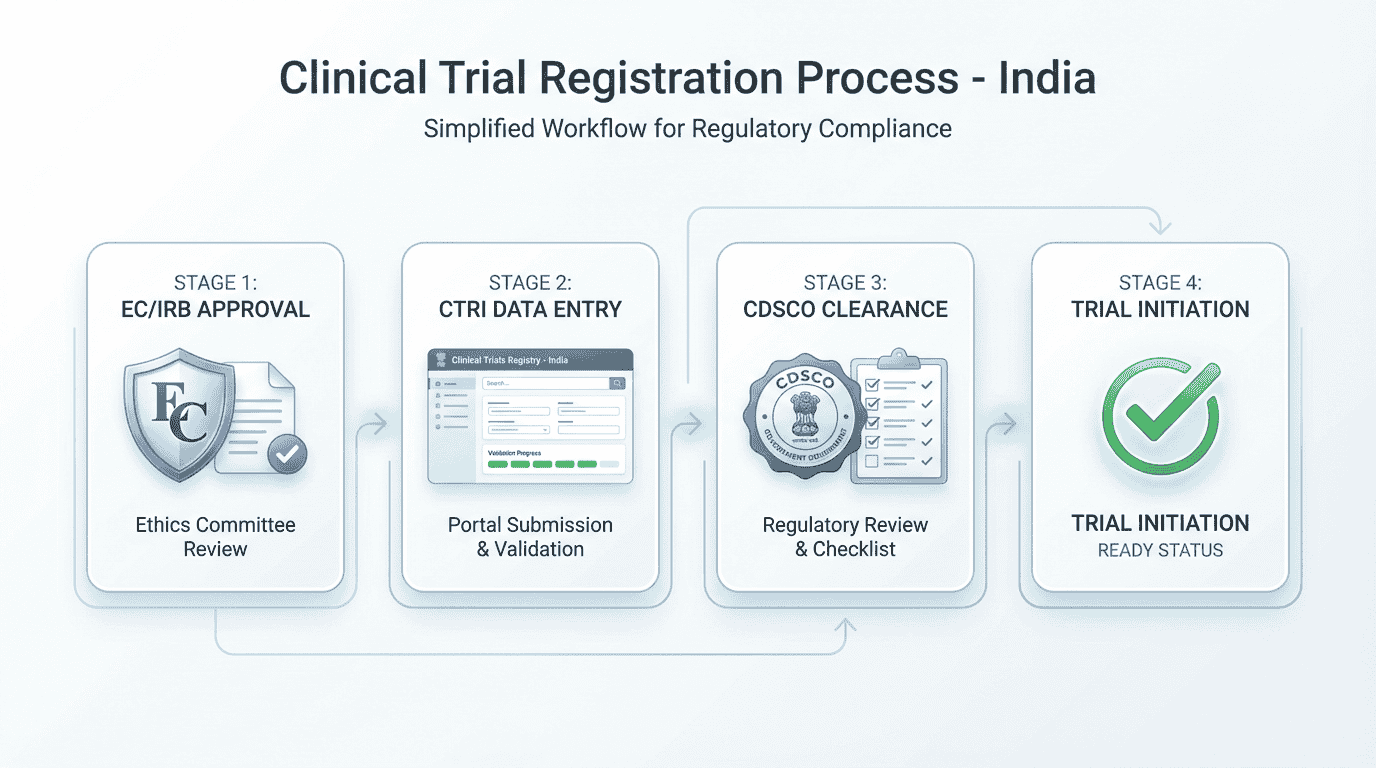
    Clinical trial registration India involves a clear, regulated sequence that every sponsor must follow before enrolling participants. Under the New Drugs and Clinical Trials Rules (NDCT Rules), 2019, registration ensures transparency, participant protection, ethical oversight, and compliance with national and global publication standards. The steps below explain the complete process in simple, structured terms.

    Strengthen early trial readiness with cleaner pre-screening workflows and organized participant intake through DecenTrialz

    Why Clinical Trial Registration Is Required

    Registration ensures:

    • Transparency of study methods and objectives
    • Participant safety and ethical oversight
    • Prevention of duplicate studies
    • Compliance with WHO and ICMJE journal requirements
    • Public availability of essential trial information

    Trials registered late may face publication barriers, regulatory concerns, or EC objections.

    Key Authorities in the Registration Process

    CTRI (Clinical Trials Registry–India)

    Public registry for prospective trial registration.
    Assigns a REF number immediately upon submission, and a CTRI Number after full review and approval.

    Ethics Committee (EC/IRB)

    Ensures participant rights and safety.
    A dated EC approval letter is mandatory at CTRI submission.

    CDSCO and DCGI

    India’s national regulatory authority responsible for approving trials involving new drugs, regulated medical devices, and certain high-risk interventions.

    Step-by-Step Registration Process for Sponsors

    The steps below reflect NDCT Rules 2019, updated CDSCO processes, current CTRI expectations, and SUGAM portal requirements.

    Step 1: Prepare the Clinical Trial Protocol

    The protocol is the foundational document describing:

    • Study purpose and design
    • Eligibility criteria
    • Number of participants
    • Interventions
    • Visit schedules and assessments
    • Safety oversight strategy
    • Data analysis plan
    • Insurance and compensation provisions

    Sponsor tasks:

    • Finalize protocol with version number and date
    • Ensure consistency across informed consent forms, case report forms, and all supporting documents

    Step 2: Prepare Participant Documents

    Participant-facing documents must be clear and easy to understand.

    These include:

    • Participant Information Sheet (PIS)
    • Informed Consent Form (ICF)
    • Translated versions (if required)

    These documents must explain:

    • Purpose
    • Procedures
    • Risks and benefits
    • Voluntary nature of participation
    • Privacy protection
    • Compensation for study-related injury

    Step 3: Submit the Study to the Ethics Committee (EC/IRB)

    The EC/IRB reviews:

    • Protocol
    • PIS/ICF
    • Investigator’s Brochure
    • Case report forms
    • Site suitability details
    • Investigator CVs
    • Insurance and compensation documents

    Regulation Update

    Under NDCT Rule 19(5), EC review may occur in parallel with CDSCO review, but:

    • CTRI requires dated EC approval letters at the time of submission, and
    • CDSCO issues final permission only after EC approval.

    Timeline: Commonly 2–6 weeks, depending on EC schedules.

    Sponsor tasks:

    • Ensure EC approval letters contain correct protocol title, version, site name, and approval date
    • Maintain approvals for all participating sites

    Step 4: Determine Whether CDSCO Approval Is Required

    A corrected and accurate decision table for 2025:

    ScenarioCDSCO Approval Required?Notes
    New drug / Investigational New Drug (IND)✔ YesRequires Form CT-04 via SUGAM
    Global clinical trial where product is IND or regulated✔ YesIND/global new drug studies require CDSCO approval
    Global trial using an approved, marketed drug without new claims✖ Often Not RequiredPurely post-marketing observational global studies may be exempt
    Bioavailability / Bioequivalence (BA/BE) study of regulated drug✔ Yes45-day review timeline
    Medical device trial (regulated categories)✔ YesAs per device risk class
    Pure observational study with no intervention✖ Not RequiredCTRI still encourages registration when unclear

    CDSCO Submission Includes:

    • Application via SUGAM Portal
    • Form CT-04 (for permission to conduct a clinical trial)
    • Fee payment through Bharatkosh
    • Protocol + Investigator’s Brochure
    • CMC and safety data (if applicable)
    • Preclinical or prior clinical data
    • EC approval before final permission
    • PI and site information
    • Compensation and insurance documentation

    CDSCO Review Timelines (NDCT Rules)

    • New drug clinical trials: Up to 90 days
    • BA/BE studies: Up to 45 days

    Sponsor tasks:

    • Register on SUGAM with Digital Signature Certificate
    • Upload documents in required formats
    • Respond promptly to CDSCO queries

    Step 5: Collect All CTRI-Required Information

    Information needed for CTRI:

    • Study titles
    • Health condition
    • Study type and design
    • Phase of study
    • Inclusion/exclusion criteria
    • Objectives and outcome measures
    • Sample size (total + per site)
    • Recruitment timelines
    • PI and site details
    • Dated EC approval letters
    • CDSCO approval details (if applicable)
    • Sponsorship details

    Documents needed:

    • EC approval letter(s) (dated and signed)
    • CDSCO approval letter (if required)
    • Final protocol
    • PIS and ICF
    • Investigator CVs
    • Insurance and compensation documents

    Step 6: Create a CTRI Account

    Actions include:

    • Register on ctri.nic.in 
    • Provide PI or responsible contact details
    • Verify email
    • Access the online registration form

    No fee is charged.

    Step 7: Complete the CTRI Registration Form

    CTRI requires precise, consistent information.

    Important expectations:

    • Titles must match EC approval exactly
    • Site list must match EC-approved sites
    • Study phase must reflect protocol and regulatory approvals
    • Interventions must be described clearly without promotional wording
    • Recruitment dates must be realistic and consistent
    • Observational studies with even minimal intervention elements must still register

    CTRI Timeline

    • REF number assigned immediately after submission
    • Review usually starts within 10 working days
    • CTRI number assigned after clarifications and approval

    Sponsor tasks:

    • Conduct a complete internal quality check
    • Fix inconsistencies in names, dates, or versions
    • Respond quickly to CTRI clarifications

    Step 8: Post-Approval Responsibilities

    Once approved:

    • CTRI number becomes public
    • Enrollment can begin (if CDSCO and EC approvals are active)

    Updating CTRI

    Updates require contacting CTRI at ctri@gov.in to unlock the record.

    Updates needed for:

    • Adding or removing sites
    • Changing investigators
    • Amendments to protocol
    • Recruitment status updates
    • Timeline extensions

    Additional Sponsor Responsibilities (NDCT Rules)

    • Report Serious Adverse Events (SAEs) within 14 days to EC and CDSCO
    • Maintain insurance coverage and compensation compliance
    • Ensure all amendments receive EC approval

    Expected Timelines 

    StepExpected Timeline
    Protocol preparation~1–3 weeks
    EC/IRB approval~2–6 weeks
    CDSCO approval (new drugs)Up to 90 days
    CDSCO approval (BA/BE)Up to 45 days
    CTRI review~10 days initial + time for clarifications

    Common Mistakes Sponsors Should Avoid

    • Submitting CTRI form without dated EC approval letters
    • Assuming global trials always require CDSCO approval
    • Using different protocol titles across EC, CDSCO, and CTRI
    • Selecting incorrect study design or phase
    • Uploading outdated protocol or ICF versions
    • Entering site names not listed in EC approval
    • Delayed responses to CTRI or CDSCO clarifications
    • Failing to update CTRI after amendments

    Avoiding these mistakes prevents delays and ensures smooth regulatory compliance.

    Final Summary: A Clean Sponsor Roadmap

    1. Finalize protocol and participant documents
    2. Submit to EC for approval (parallel CDSCO review allowed under Rule 19(5))
    3. Determine CDSCO need using the corrected IND-based criteria
    4. Submit Form CT-04 via SUGAM if required
    5. Gather all CTRI-required documents including dated EC letters
    6. Create CTRI account
    7. Submit CTRI form and receive REF number
    8. Respond to CTRI clarifications and receive CTRI number
    9. Update CTRI through email unlock requests when needed

    This end-to-end process creates a fully compliant pathway for clinical trial registration in India, ensuring ethical conduct, regulatory readiness, and participant protection.

    DecenTrialz: Supporting Early Trial Readiness 

    DecenTrialz does not file EC submissions, CDSCO applications, or CTRI registrations.
    Those responsibilities remain with the sponsor.

    However, many registration challenges come from:

    • Inconsistent eligibility criteria
    • Unclear participant-facing materials
    • Misaligned workflows between protocol and operations
    • Poor documentation structure
    • High screen failure rates due to unclear pre-screening

    DecenTrialz strengthens early trial readiness by helping sponsors:

    • Translate protocol eligibility into structured digital pre-screeners
    • Ensure participant-facing materials are consistent
    • Reduce mismatches between protocol text and operational workflows
    • Organize participant information for cleaner site review
    • Deliver only pre-qualified participants once recruitment begins

    This improves study startup efficiency and prevents avoidable screen failures.

    Improve Trial Readiness

    Ensuring clear eligibility criteria and well-organized participant workflows makes the EC, CDSCO, and CTRI process far smoother.

    Enhance your trial readiness with DecenTrialz:

    Learn More: www.decentrialz.com
    Contact the Team: www.decentrialz.com/contact

  • How to Register a Clinical Trial in the U.S. (2026 Guide for Sponsors)

    How to Register a Clinical Trial in the U.S. (2026 Guide for Sponsors)

    Registering a clinical trial in the United States can feel complicated, especially if your team is juggling IND or IDE decisions, IRB timelines, and ClinicalTrials.gov requirements at the same time. The good news is that the process becomes far more manageable once you understand the sequence and what information each step requires.

    This guide explains the registration process in simple terms so sponsors and research teams can avoid delays and keep the study startup on track.

    (Note: This guide is informational and does not replace legal or regulatory advice. Requirements evolve, and Sponsors should always verify current regulations.)

    Key Takeaways

    You will learn:

    How DecenTrialz supports pre screening and early readiness

    When your study needs an IND or IDE

    What documents IRBs expect

    What information ClinicalTrials.gov requires in 2026

    How PRS review works

    Where sponsors often lose time

    Step 1: Determine Whether Your Study Requires FDA IND Registration

    Before planning recruitment or registration, Sponsors must determine whether an investigational product requires an Investigational New Drug (IND) application.

    What an IND Is?

    An IND is FDA’s mechanism for overseeing the safety of clinical investigations involving drugs and biologics that are new, used in new ways, or used in new combinations. The IND gives FDA the opportunity to review your plan before people are exposed to the product.

    When an IND Is Required

    Generally, an IND is needed when your study:

    • Involves a new, unapproved drug or biologic
    • Uses an approved product for a new indication
    • Changes route, dose, or regimen in a way that may increase risk
    • Tests new combinations of approved products

    Some studies (for example, certain observational or non-interventional drug studies) may be exempt, but Sponsors should document the rationale.

    Types of INDs

    • Commercial IND – submitted by a company developing a product for marketing
    • Investigator IND – submitted by an individual investigator (often academic)
    • Emergency Use IND – for urgent situations where treatment cannot wait

    Documents Typically Needed

    • Protocol
    • Investigator brochure
    • Preclinical safety data
    • Chemistry, manufacturing, and controls (CMC) details
    • Informed consent templates
    • Safety monitoring and reporting plan

    The 30-Day IND Review Period

    Once FDA receives the IND, there is a 30-day statutory review period. During this time, the Sponsor must wait 30 calendar days before initiating the study. If FDA does not place the IND on clinical hold, the IND automatically goes into effect at the end of the 30 days, or earlier if FDA explicitly gives the go-ahead.

    Enrollment may begin only after:

    • The IND is in effect (no clinical hold), and
    • IRB approval has been obtained.

    Device Studies: Brief IDE Decision Framework

    If your study involves a device rather than a drug/biologic:

    • Significant risk (SR) devices generally require an FDA Investigational Device Exemption (IDE) approval plus IRB approval before starting.
    • Non-significant risk (NSR) devices do not require a full IDE submission to FDA; they follow “abbreviated IDE” requirements and only need IRB approval, but must still meet FDA device regulations.
    • Some device studies are exempt when using approved devices within labeling or under specific regulatory criteria.

    Clarifying drug vs. device pathways early helps align the registration clinical trial sequence and documentation.

    Common Sponsor Mistakes

    • Assuming IND or IDE is “approved” rather than understanding the automatic-effect or “deemed approved” frameworks
    • Submitting incomplete safety or CMC information
    • Vague primary outcomes and unclear risk justification

    Failing to document why an IND/IDE is or is not required

    Step 2: Prepare for IRB Review — IRB Approval Steps

    An Institutional Review Board (IRB) protects participant rights and welfare. IRB approval is required in addition to FDA oversight before enrollment may begin.

    What an IRB Is

    An IRB is an independent ethics committee that reviews clinical research to ensure risks are minimized and reasonable, consent is understandable, and privacy protections are in place.

    Core IRB Submission Package

    Typical documents include:

    • Full protocol
    • Informed consent and (if applicable) assent forms
    • Recruitment materials and scripts
    • Investigator brochure or device manual
    • Safety information and risk-benefit description
    • Data protection and confidentiality plans

    Central vs. Local IRB

    • Central IRB: Often used for multi-site industry-sponsored studies, providing a single, consistent review.
    • Local IRB: Common at academic centers; may require institutional templates or policies.

    Timing and Sequencing With IND/IDE

    IRBs may review protocols while FDA is reviewing an IND or IDE, but enrollment cannot start until:

    • The IND is in effect (or IDE is approved or deemed approved for NSR devices), and
    • IRB approval is in place.

    Many IRBs expect documentation of the IND or IDE status before final approval is implemented, even if review begins in parallel.

    Common Reasons for IRB Delays

    • Consent forms lacking key risk or contact information
    • Inconsistent details between protocol, consent, and recruitment materials
    • Unclear data-handling or monitoring plans
    • Missing device risk rationale (SR vs. NSR)
    • Repeated minor wording issues that slow approval cycles

    Additional Requirement: Informed Consent Posting (Common Rule)

    For certain HHS-supported clinical trials, one IRB-approved consent form used to enroll participants must be posted on a designated federal website (such as ClinicalTrials.gov) after recruitment closes and no later than 60 days after the last study visit.

    Sponsors should plan this posting as part of their documentation timeline.

    Step 3: Register the Trial on ClinicalTrials.gov

    ClinicalTrials.gov is the primary public registry for U.S. clinical trials and the focus of many ClinicalTrials.gov guide resources.

    Who Must Register?

    There are three overlapping policy drivers:

    • FDAAA 801/ Final Rule (HHS): Requires registration of “Applicable Clinical Trials” (ACTs), generally Phase 2–4 drug and biologic trials and certain device trials; Phase 1 drug trials are typically exempt.
    • NIH Policy: Requires registration and results reporting for all NIH-funded clinical trials, regardless of phase, intervention type, or whether they are ACTs.
    • ICMJE Policy: Requires prospective registration of all “clinically directive” trials (any trial assigning human subjects to an intervention to study health outcomes) as a condition for publication.

    This means a Phase 1 drug trial might be exempt from FDAAA registration but still must register if NIH-funded or if publication in an ICMJE-aligned journal is planned.

    When Registration Is Required

    • FDAAA 801 / NIH policy: No later than 21 days after enrollment of the first participant for applicable and NIH-funded trials.
    • ICMJE: Requires prospective registration—before the first participant is enrolled.

    Sponsors intending to publish or follow common institutional standards should treat “before first enrollment” as the practical default for clinical trial registration USA.

    Key Information Needed for Registration

    Before using PRS, gather:

    • Official study title
    • Brief summary (plain language, non-promotional)
    • Study design (phase for drugs, or feasibility/IDE terminology for devices; allocation, masking, primary purpose)
    • Eligibility criteria (clear inclusion and exclusion)
    • Outcome measures with specific time frames
    • Study arms and interventions
    • Enrollment type and target sample size
    • Facility locations
    • Oversight details (IND/IDE status, FDA regulated product flags)
    • Sponsor and responsible party contacts

    Phase labels (Phase 1, 2, 3, 4) apply primarily to drug and biologic studies; device trials may use alternative descriptors (for example, feasibility, pivotal).

    Step 4:Using the Protocol Registration and Results System (PRS)

    The PRS is the web-based system that manages protocol registration and results submission.

    How PRS Works

    1. Set up an organizational account – A PRS administrator at the institution or Sponsor manages user access.
    2. Enter structured data elements – Using standardized fields for design, outcomes, eligibility, locations, and oversight.
    3. Release the record for Quality Control (QC) review – ClinicalTrials.gov staff review for clarity and completeness.

    Major vs. Advisory QC Issues

    Updated PRS procedures distinguish:

    • Major Issues: Must be corrected or addressed to meet QC criteria.
    • Advisory Issues: Suggestions to improve clarity; not strictly required but recommended.

    For results, ClinicalTrials.gov may post records within 30 days of submission even if QC review is not complete, with notations that QC review is ongoing.

    Common PRS Problems to Avoid

    • Outcome measures without specified time frames
    • Vague or overlapping primary and secondary endpoints
    • Missing locations or facility information
    • Inconsistent recruitment status vs. actual site activity
    • Overuse of abbreviations without explanation

    A concise internal checklist can prevent repeated QC cycles and keep your registration clinical trial timeline on track.

    Step 5: Understand Registration Timelines

    Thinking about sequence early prevents regulatory surprises.

    Typical Operational Sequence

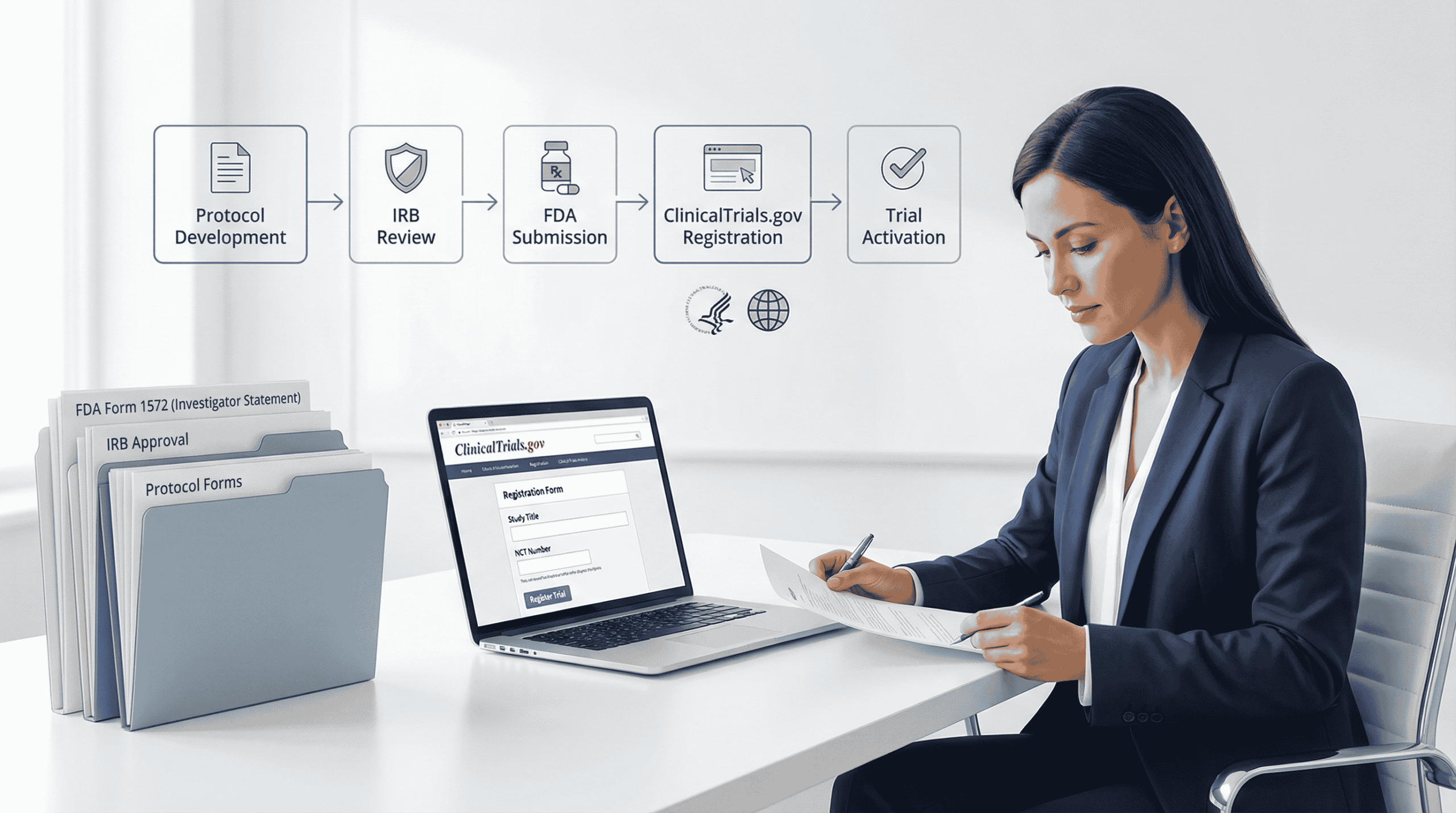
    1. Determine regulatory pathway (IND or IDE; drug vs. device).
    2. Submit IND or IDE to FDA.
    3. Wait 30 days for IND to go into effect (or for IDE approval/NSR determination), unless FDA allows an earlier start.
    4. Obtain IRB approval.
    5. Register the trial on ClinicalTrials.gov using PRS.
    6. Begin enrollment only after IND/IDE is active and IRB approval is in place.

    Registration Deadlines You Must Balance

    • FDAAA / NIH: Register within 21 days after the first participant is enrolled for ACTs and NIH-funded trials.
    • ICMJE: Register before the first participant is enrolled to remain eligible for publication.

    For most Sponsors, the safest operational approach is to complete ClinicalTrials.gov registration before first enrollment, even if the law allows a 21-day window.

    Consequences of Delayed or Inaccurate Registration

    • Civil monetary penalties under FDAAA 801
    • Potential withholding of NIH funds
    • Ineligibility for publication in ICMJE-aligned journals
    • Reputational risk and reduced public trust

    Step 6: Common Errors Sponsors Should Avoid

    Across drug, biologic, and device trials, Sponsors frequently encounter similar problems:

    • Missing or non-specific primary outcome measures
    • Outcome measures without time frames
    • Ambiguous eligibility criteria that do not match the protocol
    • Incorrect or inconsistent phase or study description, especially for device trials
    • Failure to list all active locations or update when sites open or close
    • Out-of-date recruitment status (e.g., shows “Recruiting” when enrollment is closed)
    • Protocol amendments not reflected in the ClinicalTrials.gov record
    • Not posting required consent forms for certain federally supported trials

    Reviewing these items as part of a pre-release QC checklist can greatly improve the quality of your ClinicalTrials.gov record.

    How DecenTrialz Helps Simplify Trial Readiness

    DecenTrialz does not file INDs, IDEs, IRB submissions, or ClinicalTrials.gov registrations. Those responsibilities remain with sponsors.
    However, a large portion of registration challenges come from inconsistent eligibility criteria, unclear recruitment materials, or misaligned workflows.

    DecenTrialz strengthens early trial readiness by helping sponsors:

    • Translate protocol eligibility into structured digital pre screeners
    • Ensure participant facing materials are consistent
    • Reduce mismatches between protocol text and operational workflows
    • Organize participant information for cleaner site review
    • Deliver only pre qualified participants once recruitment begins

    This improves study startup efficiency and helps prevent avoidable screen failures.

    Registering a clinical trial in the United States becomes far less stressful when you follow the correct sequence. By confirming IND or IDE requirements early, preparing complete IRB materials, entering accurate information in ClinicalTrials.gov, and avoiding common mistakes, sponsors can protect timelines and demonstrate transparency.

    If you want help organizing eligibility criteria, pre screening logic, and early participant workflows before your study launches, DecenTrialz provides a structured and HIPAA compliant way to support your trial readiness.

    Learn more: www.decentrialz.com
    Contact our team: www.decentrialz.com/contact

  • Unlocking Trial Efficiency Through a Unified Clinical Data Ecosystem

    Unlocking Trial Efficiency Through a Unified Clinical Data Ecosystem

    Unified clinical trial data ecosystem strategies are becoming essential as modern trials grow more complex. Protocols are more demanding, recruitment spans multiple channels, and decentralized models shift responsibilities far beyond the research site. Yet despite this evolution, many sponsors still rely on fragmented technology stacks that limit visibility, control, and operational speed.

    Individual platforms such as EDC (Electronic Data Capture), CTMS (Clinical Trial Management Systems), eConsent, RTSM (Randomization and Trial Supply Management), payment systems, and recruitment tools all serve important functions, but they often operate in isolation. This forces sponsors to navigate disconnected datasets, inconsistent reporting, and inefficient workflows that slow down enrollment and jeopardize trial quality.

    For sponsors aiming to improve oversight, reduce timelines, and enhance data accuracy, the path forward is clear. It is time to transition from standalone tools into a unified clinical trial data ecosystem that seamlessly connects recruitment, pre-screening, site follow-up, patient interaction, and compliance workflows.

    This is not simply about connecting systems. It requires true interoperability where data flows automatically, consistently, and intelligently across the entire clinical lifecycle.

    The Challenge: Disconnected Clinical Systems Are Creating Operational Blind Spots

    Even the most well-resourced sponsors struggle with disjointed systems. As trials expand globally, the lack of data flow between platforms like:

    • Electronic Data Capture (EDC)
    • Clinical Trial Management Systems (CTMS)
    • Randomization and Trial Supply Management (RTSM)
    • eConsent tools
    • Recruitment and pre-screening systems

    creates misalignment that slows decisions and increases costs.

    Tufts Center for the Study of Drug Development (Tufts CSDD) reports that almost 80 percent of clinical trials experience enrollment delays, often driven by operational inefficiencies and fragmented workflows rather than a lack of patient interest.

    The impact is significant.

    1. Data Silos Create Delays, Errors and Slow Decisions

    EDC, ePRO, CTMS, and recruitment tools rarely sync in real time. Sites frequently re-enter information across multiple systems, while sponsors must manually reconcile data to understand patient progress. This undermines the speed and accuracy needed for proactive decision-making.

    2. Maintaining Multiple Systems Drives Up Costs

    Each platform requires individual configuration, validation, IT support, and training. Sponsors often spend millions maintaining fragmented systems and still end up with inconsistent data.

    3. Poor Site and Patient Experience Reduces Engagement

    Sites may juggle several portals for scheduling, eConsent, eligibility, payments, and data entry. Patients often need separate logins for eConsent, ePRO, and communication tools. When systems are disconnected, engagement drops and retention risk increases.

    4. Regulatory Compliance Becomes More Difficult

    When systems are disconnected, maintaining clear documentation, consistent participant records, and dependable audit trails becomes challenging for sponsors. Data scattered across multiple tools makes it harder for teams to track actions, verify information, and stay operationally prepared. A unified ecosystem brings these elements together, offering structured workflows, cleaner documentation, and centralized visibility that strengthens overall oversight, even when individual platforms are not designed as certified regulatory systems.

    Where the Real Bottleneck Begins: Recruitment, Pre-Screening and Site Follow-Up

    One of the biggest pain points for sponsors is the early patient journey. Even well-funded trials struggle with:

    • unclear lead-to-enrollment ratios
    • dropped or untracked referrals
    • duplicate pre-screening
    • inconsistent communication from sites
    • misaligned data about patient status
    • manual handoffs between recruitment vendors, nurse teams and sites

    Sponsors need a unified recruitment data clinical trials approach that connects every stage of the patient flow and provides real-time transparency into funnel performance.

    This is where a unified clinical trial data ecosystem becomes transformative.

    The Solution: A Unified Clinical Trial Data Ecosystem

    To overcome disconnected systems, sponsors must adopt a unified ecosystem where all teams operate within a harmonized data environment. The goal is not simply integrating tools. The goal is achieving full interoperability.

    Here is the difference:

    IntegrationInteroperability
    Systems connect through custom-built APIsSystems function as one ecosystem by design
    Requires manual reconciliationEliminates manual reconciliation
    Data flow delays are commonData flows instantly across all platforms
    High IT maintenanceMinimal IT oversight
    Inconsistent data formatsStandardized data structures

    True interoperability links recruitment, screening, site activity, data capture, monitoring, and compliance into one cohesive operational engine.

    How a Unified Clinical Trial Data Ecosystem Works for Sponsors

    Below is how a modern unified ecosystem improves operational clarity and speed for sponsors.

    1. Seamless Recruitment and Pre-Screening Integration

    Participants enter through digital recruitment channels and their data automatically flows into a centralized platform. Nurse teams conduct pre-screening and eligibility reviews in the same environment. Sponsors gain real-time visibility across:

    • lead conversion
    • channel performance
    • drop-off stages
    • referral timing
    • qualification metrics

    This supports more accurate forecasting and spend optimization.

    2. Real-Time Site Follow-Up and Visit Tracking

    Sites receive referrals in a structured dashboard rather than email threads. Every action such as phone attempts, scheduling, prescreen outcomes, and screen fail reasons is visible to sponsors instantly. This removes site communication gaps and improves clinical trial performance improvement.

    3. Fully Connected EDC, CTMS and RTSM

    Instead of entering the same information into multiple systems, a unified ecosystem ensures that:

    • EDC receives verified, qualified participants
    • CTMS updates trial milestones automatically
    • RTSM aligns with actual site visit schedules

    This reduces drug waste, protocol deviations, and manual reconciliation.

    4. Unified Compliance and Centralized Audit Trails

    With a connected workflow, sponsors gain clearer documentation, structured participant records, and centralized communication logs that make oversight easier. All actions related to pre-screening, referral, and site follow-up are captured in one place, reducing manual tracking and helping study teams maintain better operational visibility. This improves monitoring efficiency, supports inspection readiness from an operational standpoint, and reduces the risk of missing critical information during study execution.

    5. A Single User Interface for Sites and Patients

    Instead of accessing multiple portals, sites and patients use one platform for consent, ePRO, scheduling, payments, and communication. Research shows that a simplified digital experience can increase patient retention by 25 to 40 percent. This improvement directly benefits sponsor timelines and reduces trial dropouts.

    The DecenTrialz Advantage: A Unified Recruitment and Screening Ecosystem for Modern Sponsors

    DecenTrialz was developed to eliminate fragmentation and give sponsors a complete operational view from first participant contact to enrollment. The platform unifies:

    A Structured Pre-Screening Process From Start to Referral

    • Study requirements are organized into a clear framework
    • Participants review and complete eConsent
    • Participants answer guided pre-screening questions
    • A Registered Nurse follows up and asks study-related questions
    • Qualified participants are referred to the site

    Sponsors gain:

    Real-time visibility: Instant insights without chasing weekly reports.

    Operational efficiency: Reduced manual work and fewer errors.

    Faster enrollment timelines: Because every step of the funnel works together.

    Lower operational costs: No more system sprawl or expensive integrations.

    High-quality clinical trial data: Supporting confident and accurate decision-making.

    The Future of Clinical Trials Depends on Unified and Connected Data

    Sponsors can no longer rely on fragmented tools if they want to accelerate timelines, improve trial quality, and operate with confidence. The future of clinical research lies in unified clinical trial data ecosystems that connect recruitment, screening, site operations, EDC, CTMS, RTSM, and compliance into one seamless workflow.

    Unified environments support:

    • consistent and accurate data
    • faster decision-making
    • improved site and patient experiences
    • better compliance
    • higher enrollment performance

    It is time for sponsors to move beyond disconnected systems and adopt a unified, interoperable ecosystem that brings clarity and control back to clinical operations.

    Transform Your Trial Operations with DecenTrialz

  • Overcoming Site Challenges: Reducing Administrative Burden

    Overcoming Site Challenges: Reducing Administrative Burden

    Running a clinical trial at the site level is as much about managing people and processes as it is about advancing science. Research coordinators, investigators, and support staff often carry a heavy load that goes far beyond participant care. Between regulatory paperwork, recruitment tracking, and sponsor reporting, site staff can feel buried in administrative demands.

    That is why improving site efficiency clinical trials has become one of the most important priorities in modern research. Reducing administrative burden is not just about saving time; it directly impacts enrollment speed, data accuracy, staff satisfaction, and ultimately, trial success.

    The Reality of Site Burdens

    Clinical trial sites are often stretched thin. A single coordinator may be juggling multiple studies, each with unique requirements, reporting systems, and sponsor expectations. Some of the most common site burdens include:

    • Complex regulatory paperwork that requires constant updates and detailed records.
    • Manual data entry across multiple platforms, increasing the chance of errors.
    • Recruitment tracking that demands hours of screening candidates who may not qualify.
    • Communication gaps between sites and sponsors that cause delays or duplicated work.

    These challenges do not just slow trials down. They contribute to staff burnout, high turnover rates, and frustration among site teams who want to focus on participant experience and quality of care.

    Workflow Optimization: Smarter, Not Harder

    One of the most effective ways to achieve site burden reduction is through smarter workflows. Instead of simply adding more staff to carry the workload, sites can rethink how everyday processes are handled.

    Key strategies for workflow optimization include:

    • Standardizing procedures: Developing templates for documentation, consent, and reporting to reduce variation.
    • Centralizing information: Storing data in one system rather than juggling multiple platforms.
    • Automating repetitive tasks: Using digital tools to manage scheduling reminders, eligibility pre-screening, and routine follow-ups.
    • Delegating effectively: Ensuring that tasks are assigned to the right team member, whether administrative or clinical.

    By streamlining these steps, research sites can focus more of their time on direct participant engagement instead of paperwork.

    Communication Between Sponsors and Sites

    Strong communication between sponsors and research sites is essential for reducing administrative workload. Too often, sites are left with unclear instructions, overlapping data requests, or delayed feedback from sponsors. This results in unnecessary duplication and wasted time.

    Improved sponsor–site communication can deliver major benefits:

    • Faster resolution of protocol questions.
    • Clearer expectations for reporting timelines.
    • Reduced redundancy in monitoring and documentation.
    • Stronger alignment on recruitment and retention strategies.

    When sponsors treat sites as true partners, administrative stress is reduced and trial performance improves.

    Technology as a Partner for Efficiency

    Technology plays an increasingly important role in workflow automation and research site management. The right tools can minimize manual work while ensuring compliance and data quality.

    Examples include:

    • Electronic Trial Master Files (eTMF): Streamlined document storage and version tracking.
    • Electronic Data Capture (EDC) systems: Real-time data entry with built-in validation.
    • Pre-screening platforms: Automatically filter out ineligible candidates.
    • Participant engagement tools: Send automated reminders for visits and medication adherence.

    With DecenTrialz filtering out ineligible candidates, sites can save hours of manual pre-screening and focus their administrative time on participants who are more likely to enroll. This not only improves efficiency but also boosts staff morale by reducing repetitive tasks.

    Balancing Compliance and Efficiency

    A common concern for sites is that cutting down administrative work may lead to compliance risks. The key is not to eliminate necessary processes but to make them easier to manage.

    • Automated systems ensure audit trails are maintained.
    • Standardized templates reduce the risk of missing critical information.
    • Digital communication tools allow for faster reporting to sponsors and regulators.

    In this way, sites can maintain compliance while also improving day-to-day efficiency.

    The Human Impact of Reduced Burden

    When administrative load is reduced, the benefits ripple across the entire trial process. Site staff experience less stress and burnout, retention improves, and participants receive more focused attention. Ultimately, smoother workflows mean trials progress faster and with fewer errors.

    Research site management is not just about paperwork. It is about creating an environment where skilled professionals can use their expertise effectively. By prioritizing efficiency, sites can transform from being overwhelmed by tasks to being empowered to deliver higher-quality research.

    Technology as a Partner in Site Efficiency

    Another important piece of site efficiency in clinical trials is how technology supports the day-to-day work of coordinators and investigators. Tools that automate scheduling, reduce duplicate data entry, and centralize communication channels can cut down on hours of repetitive work each week. When sites spend less time wrestling with paperwork or manual tracking, they have more time to focus on participants and protocol accuracy. This balance not only improves staff satisfaction but also ensures that trial outcomes are measured with greater precision. As the industry moves forward, technology will continue to play a central role in combining efficiency with quality.

    Moving Forward

    The future of clinical trials depends on strong, efficient sites that can balance regulatory demands with participant care. Sponsors, regulators, and technology providers all play a role in supporting this shift.

    By embracing workflow automation, enhancing sponsor–site communication, and adopting platforms like DecenTrialz, research sites can reduce their administrative burden while staying compliant and participant-focused.

    Improving site efficiency clinical trials is not just an operational goal. It is a step toward building a sustainable research environment where both staff and participants feel supported, and where breakthroughs can reach healthcare faster.