Blog

  • How Artificial Intelligence Is Powering Diversity in Clinical Research

    How Artificial Intelligence Is Powering Diversity in Clinical Research

    Diversity in clinical trials is shaping the future of healthcare. Every new treatment we rely on today, from vaccines to heart medicines, began as a clinical trial involving real people who chose to take part.

    These volunteers are the reason science moves forward. Yet for too long, not everyone has had the same chance to be included.

    Communities such as women, older adults, rural residents, and people of color have often been underrepresented in research. When that happens, studies fail to capture the full picture of how different groups respond to the same treatments.

    If medicine is meant for everyone, research should reflect everyone too.
    That is the heart of diversity and inclusion in clinical trials, creating research that represents the world we live in.

    Why Representation Matters

    Health is personal. Our genes, lifestyles, diets, and environments all play a role in how our bodies respond to medication.

    When most participants in a study share similar backgrounds, the results can be limited. A drug that works well in one group might act differently in another.

    Representation makes research stronger.
    By including people of different ages, ethnicities, and experiences, trials provide data that truly reflects real-world populations. The outcomes are more reliable, the treatments safer, and the science more meaningful.

    Diversity in trials is not a statistic; it is the foundation of better healthcare.

    Making Participation Accessible

    Inclusion begins with access.

    To reach more people, trials must be easier to enroll and simpler to understand. That can mean shorter, clearer consent forms, study materials written in everyday language, or translated versions for non-Native speakers.

    Accessibility also means flexibility. Offering virtual visits, home health check-ins, or partnerships with local clinics allows people to participate without disrupting their daily lives.

    For many, joining a trial should not mean choosing between their health and their responsibilities.

    When research fits into real life, participation grows and so does representation.

    The Barriers People Still Face

    Even with progress, many people still do not have equal access to research opportunities.

    Some of the most common challenges include:

    • Lack of awareness: Many individuals never hear about trials that could benefit them.
    • Distance: Research centers are often based in large cities, far from rural or underserved areas.
    • Mistrust: Past experiences and unethical practices in history have left some communities cautious about participating.
    • Language and complexity: Consent forms and study materials can be difficult to understand or not available in multiple languages.
    • Daily life: Work, transportation, and family responsibilities can make it hard for people to take time away.

    These challenges are not just technical; they are human. And addressing them requires empathy, communication, and commitment.

    Building Trust Through Communication

    Trust is the cornerstone of participation. Without it, even the most innovative research will struggle to reach people.

    Building trust starts with openness. Participants deserve to know how their data will be used, what a trial involves, and how it contributes to something meaningful.

    When researchers explain things clearly, answer questions honestly, and listen to concerns, participation becomes more than a formality. It becomes a partnership.

    Respectful communication turns hesitation into confidence.

    When people feel informed and valued, they are far more likely to take part and stay involved.

    Why Inclusive Data Leads to Better Science

    When a study includes a wider mix of participants, the data it produces is far more useful.

    It helps scientists see how treatments perform across different populations by age, gender, background, and region. It can also uncover patterns that might otherwise go unnoticed, such as side effects that affect one group more than another.

    Inclusive data makes research more accurate and results more dependable. It ensures that discoveries lead to treatments that work safely and effectively for everyone, not just a few.

    Science becomes stronger when every voice is part of the story.

    Working Together Toward Equity

    Real progress happens when everyone involved in research plays their part.

    • Sponsors can design studies that focus on inclusion from the very beginning.
    • Research sites can partner with community clinics and local health centers to reach more participants.
    • Healthcare professionals can help patients understand that trials are safe, regulated, and open to them.
    • Advocacy groups can raise awareness, encourage participation, and represent the voices of underrepresented communities.

    Inclusion is not the job of one person or one organization. It is something the entire research community has to build together.

    When each group contributes, the impact multiplies and so does trust.

    How DecenTrialz Supports Inclusive Research

    At DecenTrialz, inclusion is not an afterthought; it is built into everything we do.

    The platform helps research teams connect with participants from all walks of life, ensuring that studies reflect the diversity of real-world populations.

    Here is how DecenTrialz makes that happen:

    • Broader outreach: Reaching people through trusted networks, local partnerships, and clear communication.
    • Simplified processes: Making participation easy to understand and manage.
    • Privacy-first design: Protecting personal data and earning participant trust through transparency.
    • Flexible participation: Supporting both traditional and decentralized study formats to increase accessibility.

    Our mission is simple: to make research open, fair, and human. Because medicine should reflect the people it is meant to help.

    The future of clinical research depends on inclusion.

    When studies welcome people from all backgrounds, the results tell the full story of how treatments work in the real world. Each participant adds a unique perspective that makes the data more accurate and the outcomes more meaningful.

    The next generation of clinical research will not only be faster or more digital; it will be fairer, more representative, and more compassionate.

    That is what progress looks like when people are at the center.

    Diversity and inclusion are more than ethical goals; they are the key to better science.

    Every volunteer who joins a clinical trial brings value that goes beyond data. They bring experience, trust, and hope for a healthier future.

    At DecenTrialz, we believe that research should reflect everyone, not just a select few.
    When every community is represented, discoveries become stronger, safer, and more meaningful.

    Real progress in healthcare begins when everyone is included.

  • AI in Clinical Trials: From Recruitment to Retention

    AI in Clinical Trials: From Recruitment to Retention

    AI in Clinical Trials is reshaping the future of medical research. When a small research team in Florida launched a new heart study last year, they were excited but nervous, just like many others starting a clinical trial. Finding the right participants had always been their biggest hurdle. Flyers, ads, and physician referrals brought in only a trickle of responses. Deadlines were slipping, and funding milestones were at risk.

    So, the team decided to try something new: an AI-powered recruitment tool. Within a few weeks, they identified twice as many eligible participants as before, including people from communities that had been overlooked in past studies. For the first time, the study stayed on track.

    Stories like this are becoming more common. AI in Clinical Trials is not about replacing people. It is about giving research teams the tools to work smarter, reach participants faster, and create a more human experience from start to finish.

    Let’s explore how AI is helping researchers move from recruitment to retention and transforming the way trials are run.

    Smarter Recruitment: Finding the Right People Faster

    Recruitment is the toughest part of most trials. Around 80% of studies struggle to enroll participants on time. Traditional methods like email blasts, brochures, or physician outreach often miss the people who might actually qualify or be interested.

    AI helps solve that. By analyzing data from electronic health records, past trials, and even local health trends, AI systems can identify potential participants who fit the criteria precisely and predict who might be most likely to respond.

    In that Florida study, the AI tool helped the team focus on patients living within a certain radius who had matching conditions. Coordinators could finally spend more time reaching out personally instead of sifting through spreadsheets.

    For sponsors, that means shorter timelines.
    For research sites, less frustration.
    And for patients, more opportunities to be part of something meaningful.

    Personalized Communication: Keeping Participants Engaged

    Finding participants is only half the job. The real challenge is keeping them involved until the end. Many people drop out because they feel disconnected, overwhelmed, or simply forgotten once the trial begins.

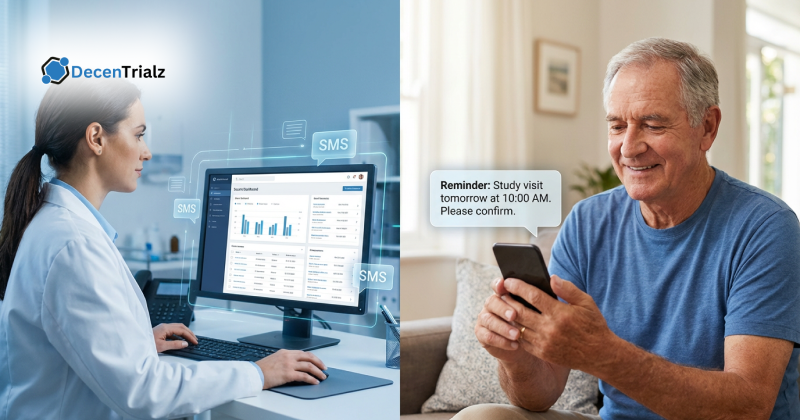
    AI-driven engagement tools are helping fix that. They learn each participant’s preferences and communication patterns. If someone tends to ignore morning reminders but responds better at night, the system adjusts automatically. If a participant misses a check-in, AI alerts coordinators to reach out personally.

    This kind of personalization makes participants feel seen and valued. Instead of robotic reminders, they get relevant, timely communication that supports them throughout their journey.

    When people feel cared for, retention improves and data quality does too.

    Real-Time Monitoring: Enhancing Safety and Efficiency in Clinical Trials

    Traditional monitoring happens in cycles, sometimes weeks or months apart. That delay can hide safety issues or protocol deviations.

    AI changes that by enabling real-time data monitoring. It continuously reviews information from wearable devices, eCRFs, and virtual visits to detect anomalies instantly. If a reading looks off or a trend breaks protocol, the system flags it for immediate review.

    This does not replace human oversight; it strengthens it. Monitors and CROs can focus on high-risk events instead of manually checking every data point.

    The result is safer participants, cleaner data, and fewer delays.

    Predictive Insights: Planning Smarter, Not Harder

    AI can learn from thousands of past trials to predict what might happen in new ones. It can identify which sites are likely to recruit faster, where retention might be a problem, and when timelines are at risk.

    Sponsors can use these predictive insights to choose better site locations, allocate resources more effectively, and plan recruitment campaigns with real data instead of guesswork.

    For example, one sponsor found that suburban sites consistently achieved steadier retention rates than urban centers. By shifting future studies accordingly, they reduced overall delays by nearly 30%.

    With insights like these, AI helps researchers spend less time reacting and more time improving.

    Building More Inclusive and Diverse Trials

    Diversity has always been a challenge in clinical research. Too often, studies reflect only a small portion of the population.

    AI can help bridge that gap. By analyzing anonymized population data, AI systems highlight underrepresented groups and suggest ways to reach them, whether through local health networks, digital campaigns, or hybrid study designs.

    It can even help identify social or logistical barriers, such as lack of transportation, and recommend solutions like tele-visits or mobile sites.

    This does not just make studies fairer; it makes them scientifically stronger. More diverse participation means more reliable data and treatments that work for everyone.

    The Human Factor: AI as a Partner, Not a Replacement

    There is a misconception that AI will replace the people who make trials happen. The truth is the opposite.

    AI takes care of the repetitive, data-heavy work like eligibility checks, form reviews, and scheduling so coordinators, nurses, and investigators can focus on patients and research.

    It is like having an extra set of hands that never gets tired. Human expertise, empathy, and judgment remain at the center of every decision.

    When technology handles the busywork, people have more time to do what only humans can do: build trust, explain care, and make participants feel part of something bigger.

    The Road Ahead: Ethical, Transparent, and Patient-First

    As AI becomes a bigger part of research, transparency and ethics must lead the way. Data privacy, security, and fairness are not optional; they are essential. Regulations like HIPAA and GDPR, along with emerging standards for explainable AI, ensure accountability and trust.

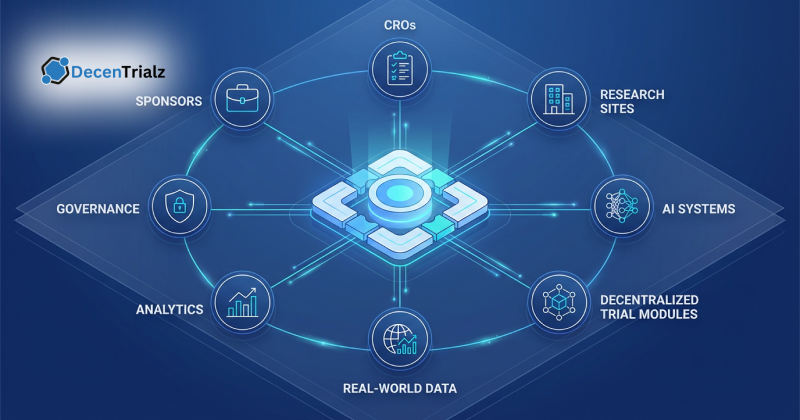
    Platforms like DecenTrialz are helping make that future real. By connecting sponsors, CROs, and sites with AI-driven tools for recruitment, monitoring, and retention, DecenTrialz is proving that technology can be both powerful and humane.

    It is not about making trials colder or more mechanical; it is about giving researchers and participants the clarity, connection, and confidence they deserve.

    AI in clinical trials is not just about algorithms. It is about people, the researchers, coordinators, and patients who make medical progress possible.

    From the moment someone is identified as a potential participant to the day they complete their final visit, AI is there to simplify, support, and strengthen the process.

    The future of research is not just faster; it is fairer, smarter, and more human.
    When technology and empathy work together, everyone wins.

  • Keeping Data Safe: Privacy in AI-Powered Clinical Trials

    Keeping Data Safe: Privacy in AI-Powered Clinical Trials

    Imagine sharing your health story, your diagnosis, treatments, and lab results, so that one day someone else might live a healthier life because of what doctors learn from you. That is what happens when people join clinical trials. It is an act of hope, generosity, and trust.

    But trust does not come automatically. People open up only when they believe their information will stay safe and private.

    Now, with artificial intelligence becoming a bigger part of research, that trust matters more than ever. AI in Clinical Trials is helping researchers find participants faster, uncover insights sooner, and improve outcomes in ways we could not before. Yet it also depends on one vital promise: your personal data must stay protected, always.

    Let us look at what privacy really means in an AI-powered world and how research can stay both smart and safe.

    Privacy Is Personal

    Every bit of data in a clinical trial represents someone’s story, a mother managing heart disease, a teenager living with diabetes, a veteran battling pain. Behind every statistic is a person who has chosen to help science move forward.

    Protecting that data means protecting their dignity. Privacy is not about locking information away; it is about handling it with respect. When people feel safe sharing their stories, research moves faster, and everyone benefits.

    Privacy, at its heart, is about people, not paperwork.

    The Rules That Keep Information Safe

    Clinical research already follows strict laws designed to protect patients everywhere.

    In the United States, HIPAA requires that health data be stored securely and shared only with permission. It limits access, mandates encryption, and gives people rights over their own medical information.

    In Europe, GDPR adds even more safeguards. It lets participants see what data has been collected, correct mistakes, or request deletion entirely.

    Similar protections exist worldwide, including Canada’s PIPEDA and California’s CCPA, all focused on the same principle: people should control how their personal health information is used.

    How AI Changes the Conversation

    AI has completely reshaped how clinical trials operate. It can scan through thousands of medical records to find eligible participants, detect safety risks faster, and even predict outcomes before a trial finishes.

    But that power also means more responsibility.

    • AI needs a lot of data. The more information it has, the smarter it becomes, and that data must be stored and used securely.
    • Even anonymous data can reveal identities. With enough details, AI might accidentally recognize someone, which is why careful de-identification is crucial.
    • Transparency matters. If AI helps decide who qualifies for a study, researchers must explain how those decisions are made.

    AI does not replace human ethics; it challenges us to be even more ethical.

    The Tools That Protect Patient Privacy

    Every trial collects sensitive details such as test results, doctor notes, or wearable device readings. None of it should ever be visible to unauthorized eyes.

    The first line of defense is encryption. It locks data so that only trusted systems can open it.

    The next is de-identification, which removes personal details like names, addresses, and birth dates. So instead of “John, 52, Chicago,” the AI sees “Participant 1027.” The person stays invisible, but their experience still helps advance science.

    It is how researchers honor both progress and privacy at the same time.

    Building Privacy Into the Design

    Good privacy does not happen by accident. It starts with design.

    Developers and research teams now follow a principle called Privacy by Design, which means thinking about protection from the very beginning.

    That includes:

    • Giving data access only to verified users
    • Tracking every action taken on a dataset
    • Testing algorithms for fairness and bias
    • Limiting collection to only the information needed for the study

    When privacy is built into the foundation, it does not slow progress, it strengthens it.

    Why Human Oversight Still Matters

    AI can process data faster than any person, but it does not have empathy, context, or moral judgment. That is why people will always play the most important role in clinical research.

    Researchers make sure data is used correctly. Coordinators explain consent clearly. Participants stay in control of their information.

    Human oversight ensures that privacy is not just a checkbox, it is a living value guiding every decision.

    How DecenTrialz Keeps Data Safe

    At DecenTrialz, privacy is not an add-on. It is at the heart of everything.

    Here is how we protect participant information every day:

    • Encryption: Data is secured both in storage and in transit.
    • De-identification: Personal details are removed before analysis.
    • Access Control: Only verified researchers and authorized staff can view sensitive information.
    • Compliance: Every feature aligns with HIPAA, GDPR, and ISO 27001 standards.
    • Transparency: AI insights are explainable, traceable, and ethically monitored.

    DecenTrialz combines advanced AI with strong human ethics so innovation never comes at the expense of trust.

    The Future: Innovation With Integrity

    Technology will keep evolving, and so will privacy protections.

    New methods like federated learning let AI learn from data stored in different places without moving it anywhere. Differential privacy adds small, random variations to datasets so individual identities can never be pinpointed.

    These tools prove that privacy and progress do not have to compete, they can work together beautifully.

    The future of AI-powered research is one where every breakthrough is built on respect for the people who made it possible.

    AI is making clinical trials faster, smarter, and more inclusive, but technology alone is not what makes research strong. Trust does.

    Every piece of data represents someone’s courage to share their story. Protecting that story is not just a legal duty; it is a moral one.

    When privacy and innovation go hand in hand, science becomes something everyone can believe in.

    At DecenTrialz, that is the kind of future we are building, one where technology serves people, not the other way around.

    Because real progress starts with protecting the people behind the data.

  • Decentralized vs Centralized Trials: Choosing the Right Approach

    Decentralized vs Centralized Trials: Choosing the Right Approach

    In the world of clinical research, every decision shapes the future of medicine. For sponsors, one of the most critical choices is how a trial will be conducted: through traditional centralized models, emerging decentralized designs, or a hybrid of the two.

    This is not just an operational decision. It impacts participant engagement, site performance, timelines, costs, and ultimately, the reliability of the data. As global clinical trials collaboration grows, sponsors are under increasing pressure to select trial structures that work across borders, cultures, and regulatory systems.

    The question is: how do you decide which model is the right fit?

    A Tale of Two Trials

    Imagine two oncology studies starting at the same time.

    The first trial uses a centralized model. All participants travel to a few major research hospitals, where every visit, test, and interaction happens in person. Investigators have full oversight, and the data flows from a central point.

    The second trial opts for a decentralized model (DCT). Participants use wearable devices to track vital signs, complete e-consent on their own devices, and connect with coordinators through virtual visits. Lab samples are collected at local clinics or even at home by trained professionals.

    Both approaches have strengths. Both have weaknesses. And both tell us something about how trial design is evolving.

    Centralized Trials: Strengths and Challenges

    Centralized trials are the traditional backbone of research. They give sponsors and investigators a high level of control, with all processes managed in a single location or network of sites.

    Advantages of centralized trials include:

    • Strong investigator oversight and face-to-face participant interactions.
    • Consistency in how procedures and data are managed.
    • Easier compliance with regulatory and quality standards.

    But these strengths come at a cost.

    Challenges include:

    • Geographic barriers that limit who can participate.
    • Higher participant burden, especially for those who must travel frequently.
    • Slower recruitment and retention, particularly for rare conditions or diverse populations.

    Centralized trials are reliable, but in today’s environment of global clinical trials collaboration, they can feel restrictive.

    Decentralized Trials (DCT Models): The New Frontier

    Decentralized clinical trial models are designed with flexibility and accessibility in mind. Instead of requiring participants to come to the trial, many aspects of the trial come to the participants.

    Advantages of decentralized trials include:

    • Expanded reach, making it easier to recruit participants from different geographies.
    • Reduced participant burden through virtual visits and local data collection.
    • Real-time insights from digital health tools like wearables and apps.

    Challenges include:

    • Technology adoption, not every participant or site is comfortable with digital tools.
    • Data management complexity when information flows from multiple sources.
    • Variability in regulatory acceptance across regions.

    DCTs are not a universal solution, but they open new possibilities for inclusivity, speed, and efficiency.

    Hybrid Clinical Trials: The Best of Both Worlds

    For many sponsors, the answer lies not at one extreme but in the middle: hybrid clinical trials.

    Hybrid models combine the oversight of centralized trials with the accessibility of decentralized tools. For example, key procedures may still take place at a central site, but follow-up visits, questionnaires, and monitoring can happen remotely.

    Benefits of hybrid models include:

    • Flexibility to meet participants where they are.
    • Balance between control and convenience.
    • Improved recruitment by lowering barriers while maintaining investigator involvement.
    • Increased diversity in participant populations.

    Sponsors looking to streamline operations can leverage digital platforms like DecenTrialz to manage participant requirement and data securely across multiple sites

    Decision Frameworks for Sponsors

    Choosing between centralized, decentralized, and hybrid approaches is not about following a trend, it’s about making a strategic choice that fits the trial’s objectives. Sponsors should consider:

    1. Therapeutic area and trial phase
      Early-phase trials with complex procedures may benefit from centralized control. Later-phase trials aiming for diversity may lean toward decentralized or hybrid models.
    2. Participant profile
      Are participants widely distributed, or located near major research hubs? Do they have access to technology needed for DCT models?
    3. Regulatory environment
      Different countries may vary in how they accept decentralized methods. Regulatory harmonization is essential in global programs.
    4. Budget and resources
      Centralized trials often require higher travel support and site costs, while decentralized models may require investment in digital infrastructure.
    5. Retention goals
      Hybrid models often strike the right balance by keeping participants engaged without overwhelming them.

    By using a structured framework, sponsors can match the trial design to both scientific and human needs.

    As global clinical trials collaboration expands, the trend is clear: trial design is becoming more flexible, inclusive, and participant-centered.

    • Centralized trials will continue to play a role, especially in highly complex studies.
    • DCT models will grow, driven by digital adoption and the demand for broader access.
    • Hybrid clinical trials will likely become the dominant model, offering the adaptability sponsors need in a global research environment.

    Sponsors who embrace decision-making frameworks, invest in technology, and partner with advocacy groups will lead the way in designing trials that are both scientifically rigorous and participant-friendly.

    The choice between centralized, decentralized, and hybrid trial models is not just a logistical one. It is a choice about how research engages with people, how it includes diverse communities, and how quickly life-changing therapies reach those who need them.

    For sponsors, the challenge is real, but so is the opportunity. With thoughtful sponsor decision-making, investment in innovation, and partnerships that span borders, the future of clinical research will be defined by smarter, more inclusive designs that reflect the promise of modern science.

  • Patient Advocacy and AI: Connecting Communities to Trials

    Patient Advocacy and AI: Connecting Communities to Trials

    Patient advocacy and AI are transforming how people discover, understand, and join clinical trials. Every new treatment begins with individuals and families who decide to take part in research, often motivated by the chance to improve healthcare for others as well as themselves.

    Advocacy groups help make this possible. They translate complex scientific information into something patients can understand and trust. They explain what clinical trials are, how participation works, and what potential benefits and risks exist. For many people, advocates are the first link between curiosity and confident participation.

    Still, many who could qualify for research never hear about these opportunities. Finding the right trial, meeting eligibility criteria, and feeling comfortable enough to participate can be challenging. That is where responsible technology plays a role.

    When used thoughtfully, patient advocacy and AI together help connect people to the studies that matter to them, improve outreach efforts, and make clinical research more inclusive.

    1. The Real Role of Advocacy in Clinical Research

    Advocacy ensures that patient voices are included in every stage of medical research.

    Advocates raise awareness, support families, and help researchers understand what matters most to patients. They also make trial information easier to grasp by simplifying complex terms and explaining the process clearly.

    Without these groups, clinical research would remain difficult for many to access. Advocacy gives people the confidence to explore options that might otherwise seem out of reach.

    2. Why Many Communities Still Miss Out

    Even with progress in digital communication, there are still barriers that prevent patients from joining trials.

    Some of the most common challenges include:

    • Limited awareness: Many patients never learn that studies exist or that they qualify.
    • Accessibility: Research centers are often located far from smaller communities.
    • Complex language: Technical terminology can discourage participation.
    • Mistrust: Concerns about data use and privacy still affect decision-making.

    Addressing these issues requires more than just technology; it takes cooperation between advocacy groups, researchers, and healthcare professionals to reach people where they are.

    3. How Technology Supports Advocacy

    Modern data systems can help advocacy organizations work more efficiently without losing their personal touch.

    Patient advocacy and AI together can identify where certain health conditions are more common, track studies that are currently recruiting, and organize this data for easy sharing.

    Instead of manually searching through multiple registries, advocates can use technology to quickly find accurate information and guide patients to appropriate trials. AI handles data management while people focus on relationships and communication.

    4. Making Clinical Information Easy to Understand

    Scientific details can often feel overwhelming. Terms such as “randomized,” “double-blind,” or “placebo-controlled” can make clinical trials sound complicated or intimidating.

    AI-based tools can help simplify this information by creating summaries or visual explanations that clearly describe who the study is for, where it takes place, and what participation involves.

    When information is simple and transparent, patients are more likely to ask questions, talk to their doctors, and make decisions confidently.

    5. Using Data to Improve Diversity in Research

    Diversity in clinical research ensures that medical findings apply to everyone. Studies that include participants from different backgrounds provide more accurate, meaningful results.

    AI can analyze enrollment patterns and identify underrepresented populations. Advocacy groups can use these insights to plan outreach in areas where awareness or access is low.

    By aligning patient advocacy and AI, research becomes more balanced and representative of the real world.

    6. Building Trust Through Transparency

    Trust is the foundation of clinical participation. Patients need to know that their data is protected and used responsibly.

    Advocacy groups can strengthen that trust by working with technology platforms that prioritize data security and compliance. Explaining how information is collected, stored, and used helps patients feel more comfortable sharing it.

    Clear communication keeps participants informed and reassured throughout the process.

    7. The Role of DecenTrialz

    At DecenTrialz, our goal is to make research more accessible and transparent for everyone.

    The platform connects advocacy groups, Sponsors, and research sites through verified data and reliable search tools. It simplifies how communities find active studies and helps research teams identify where additional outreach is needed.

    By combining the strengths of patient advocacy and AI, DecenTrialz is helping research partners build stronger, faster, and more inclusive connections.

    8. Looking Ahead

    As healthcare continues to evolve, patient advocacy and AI will remain central to making research more inclusive and efficient.

    Technology can manage data, predict needs, and simplify complex information, but people are the ones who turn that information into meaningful progress.

    When advocates, researchers, and technology teams work together, clinical trials become easier to access, easier to understand, and more representative of the communities they serve.

    Progress in clinical research depends on collaboration. Researchers bring science and structure, while advocacy groups bring awareness and understanding.

    When these efforts come together with the support of responsible technology, clinical trials reach more people and deliver better outcomes.

    At DecenTrialz, we continue to focus on making research participation simpler, safer, and more connected for everyone involved.

  • AI for Trial Sites: Making Workflows Smoother and Care More Personal

    AI for Trial Sites: Making Workflows Smoother and Care More Personal

    AI for trial sites is transforming the way research teams work, not by replacing people, but by helping them focus on what truly matters. Running a clinical trial site has always been a demanding job. Between managing patient visits, verifying data, and keeping up with regulatory documentation, it often feels like there are never enough hours in the day.

    Now, with the support of AI tools designed specifically for clinical research, site staff can work more efficiently, minimize errors, and spend more time caring for participants instead of managing paperwork.

    The Reality Behind Site Operations

    If you ask a site coordinator what a “typical day” looks like, they’ll probably laugh, because there isn’t one.

    Some mornings start with reviewing lab results or confirming visit schedules. By midday, coordinators might be entering data or resolving queries from sponsors. And by late afternoon, they’re preparing for monitoring visits, following up on patient questions, and completing forms before the day ends.

    There’s pride in the work, but also constant pressure. That’s where AI for trial sites truly shines, it doesn’t replace expertise, it simply helps remove repetitive tasks, creating space for better focus and human connection.

    How AI Actually Helps

    AI doesn’t arrive with a bang. It quietly integrates into daily workflows, taking care of small but time-consuming details that add up.

    Here’s what that looks like:

    • Smarter prescreening: AI tools compare patient records with eligibility criteria instantly, flagging potential matches for review.
    • Efficient scheduling: Automated reminders ensure appointments are confirmed and fewer visits are missed.
    • Real-time accuracy checks: AI catches data inconsistencies early, helping teams maintain clean, audit-ready records.
    • Pattern recognition: It can also identify recruitment gaps or early signs of participant drop-off before they become bigger issues.

    AI for trial sites is all about steady, behind-the-scenes support that keeps everything running smoother.

    More Time for What Matters Most

    When repetitive tasks are reduced, research teams can focus on people again.

    Investigators can review safety data more thoughtfully, and coordinators can take the time to explain procedures clearly, answer questions, and ensure participants feel comfortable throughout the process.

    AI for trial sites gives back time, time to listen, time to reassure, and time to provide the personal attention that builds trust and retention.

    Bringing the Human Side Back

    Some people worry that more technology might make research feel impersonal. In reality, that personal connection doesn’t get lost, it often grows stronger.

    By taking care of background work, AI allows site staff to re-engage with the human side of their role. The participants feel more seen, and staff feel less overwhelmed. It’s not about automation; it’s about restoring balance.

    When technology quietly supports the process, clinical research becomes more human, not less.

    Better Collaboration Across Teams

    AI also strengthens teamwork across sites, sponsors, and CROs. When data flows more clearly and reports are generated faster, everyone communicates more effectively.

    Instead of chasing updates or managing duplicate entries, teams can focus on solving problems and advancing the study. AI for trial sites brings calm and clarity to what used to be a stressful, fragmented process.

    Staying Secure and Compliant

    Every clinical trial depends on trust, and that includes how data is handled.

    AI systems built for clinical research follow strict privacy and security standards, including HIPAA compliance. They organize records, maintain traceability, and make it easier for sites to stay inspection-ready without extra stress.

    The result? Better accuracy, fewer compliance risks, and more confidence for both sites and sponsors.

    Empowering Site Staff Through Simplicity

    One of the most meaningful outcomes of AI adoption is how it empowers site staff to feel more in control of their workload. Instead of being buried under emails, spreadsheets, and manual tracking, coordinators can see what needs their attention most urgently and plan their day more effectively. This sense of clarity helps reduce burnout and strengthens morale across teams. When people feel less overwhelmed, the quality of their work improves, communication becomes smoother, documentation is more consistent, and participants feel the difference in how attentively their trial experience is managed.
    To explore how DecenTrialz supports site teams with smarter digital workflows, visit our Research Sites page. 

    A Glimpse of What’s Ahead

    The future of clinical research will continue to evolve, but one thing is certain, AI for trial sites is here to stay.

    As technology grows smarter, sites will be able to predict recruitment timelines, track study performance in real time, and provide an even more participant-centered experience. Yet even with all that innovation, the heart of research will always be human.

    AI may analyze data, but people provide the empathy and care that make every trial possible. Together, they create a model of research that is faster, safer, and more compassionate.

  • AI Tools for CROs and Sponsors: Streamlining Clinical Trials

    AI Tools for CROs and Sponsors: Streamlining Clinical Trials

    AI tools for CROs and Sponsors are transforming how modern clinical trials are planned, managed, and delivered. Running a clinical trial has never been simple. There are hundreds of moving parts: protocols to follow, sites to manage, patients to recruit, and data to keep accurate. Every step depends on another, and even a small delay can affect the entire study.

    For Sponsors and Contract Research Organizations (CROs), keeping everything on schedule has always been a challenge. The goal is simple: move faster without compromising on quality or compliance.

    That is where artificial intelligence makes a difference. Once considered futuristic, AI is now helping clinical research teams work smarter, not harder. When used responsibly, AI tools for CROs and Sponsors improve efficiency, reduce risks, and free people to focus on what matters most, better science and safer outcomes for patients.

    Let’s look at how these tools are changing the way Sponsors and CROs design, monitor, and deliver clinical trials.

    1. Smarter Study Planning

    Before a single patient is enrolled, months of preparation go into designing a study. Teams must estimate timelines, select endpoints, and predict enrollment rates. Getting these details wrong can delay a trial before it even starts.

    AI tools for CROs and Sponsors help analyze data from past trials to identify realistic patterns and challenges. They can predict where recruitment might slow down, how inclusion criteria might limit enrollment, or which sites could face performance gaps.

    Instead of starting from scratch, teams begin with insights that make planning clearer, faster, and more effective.

    2. Better Site Selection

    Finding the right sites can make or break a study. A site with the right infrastructure and investigator experience can keep trials running smoothly, while an unprepared site can cause costly delays.

    AI-powered platforms now use historical data, location analytics, and patient demographics to suggest the most suitable research sites. They can also highlight new potential locations that support diversity and inclusion goals.

    This allows Sponsors and CROs to build stronger site partnerships based on data, not just intuition.

    3. Making Recruitment More Human and Efficient

    Recruitment delays remain one of the biggest challenges in clinical research. Many studies take longer than expected simply because they struggle to reach eligible participants.

    AI tools for CROs and Sponsors simplify this process by identifying potential participants faster. They analyze electronic health records, patient registries, and public data to match the right people with the right studies.

    But while technology speeds up the search, it is the human connection that earns trust. Research teams that combine digital insights with empathy see higher participation and retention rates.

    4. Real-Time Oversight and Monitoring

    Traditional monitoring requires frequent on-site visits and manual data review, which can be time-consuming and expensive.

    Modern tools now make it possible to monitor study data continuously. Systems automatically flag unusual patterns, errors, or missing entries as soon as they appear.

    This proactive oversight helps Sponsors stay compliant and enables CROs to focus their resources where they are needed most. It supports Risk-Based Monitoring (RBM), where teams focus on high-risk areas instead of treating every site the same way.

    5. Cleaner, Faster Data Management

    Clinical trials generate massive amounts of data from multiple sources. Keeping it organized and consistent is essential for reliable outcomes.

    Smart management tools can detect duplicates, fix inconsistencies, and integrate information across systems. For CROs and Sponsors, that means faster reporting, fewer manual corrections, and cleaner data ready for submission.

    With these systems in place, researchers can spend less time cleaning spreadsheets and more time analyzing real insights.

    6. Predictive Planning and Early Problem Detection

    AI is not only about automating tasks, it is about seeing what might happen next.

    Predictive analytics can spot trends before they cause trouble. It can alert teams to slow recruitment, identify potential supply delays, or signal when a site’s performance is slipping.

    For Sponsors, that means smarter budget and timeline management. For CROs, it means they can act early instead of reacting late.

    7. Stronger Collaboration Between Sponsors and CROs

    Good communication between Sponsors and CROs is key to every successful trial. In the past, much of this happened through scattered files, emails, or meetings.

    Today, shared dashboards and centralized workspaces make collaboration seamless. Both sides can track progress, share updates, and make data-driven decisions in real time.

    AI tools for CROs and Sponsors help create transparency and accountability, so every step of the process stays visible and aligned.

    8. Looking Ahead

    The clinical research world is evolving quickly. Studies are more global, more digital, and more complex than ever before.

    AI will continue to play an important role in helping research teams stay efficient and compliant. But success depends on how these tools are used, responsibly, ethically, and always with patients at the center.

    Technology alone cannot replace experience or empathy. The best outcomes happen when people and systems work together toward a shared purpose: advancing science and improving lives.

    CROs and Sponsors drive the future of clinical research. Their work requires precision, coordination, and trust.

    AI tools for CROs and Sponsors do not replace human expertise, they enhance it. They reduce repetitive work, uncover insights faster, and strengthen collaboration across every stage of the trial. At DecenTrialz, we believe the right technology should make research simpler and more transparent while keeping people at the heart of every study. When innovation and human insight come together, trials become faster, fairer, and more reliable for everyone involved.

  • Myths vs Reality: The Truth About AI in Clinical Trials

    Myths vs Reality: The Truth About AI in Clinical Trials

    AI in Clinical Trials is reshaping the future of medical research. For decades, clinical studies have been the heartbeat of medical progress, yet the process has remained slow, expensive, and buried in paperwork. Today, Artificial Intelligence (AI) is stepping in to transform how we design, recruit, and manage studies with greater accuracy and speed.

    But with this transformation comes a swirl of myths. Many worry that AI will “replace humans,” make trials less personal, or even introduce bias. The truth? AI isn’t replacing the human touch; it’s helping the people behind the science do their jobs better.

    Let’s break down the most common myths and uncover the real story behind AI in clinical research.

    Myth #1: “AI will take over and replace human researchers.”

    Reality: AI isn’t taking over, it’s teaming up.

    Think of AI as a highly skilled assistant, not a replacement for human judgment. It helps researchers process massive volumes of data faster, identify patterns, and flag potential risks, but the final decisions still come from human experts.

    At one mid-sized oncology research site in Boston, the team was struggling to keep up with eligibility checks for new participants, reviewing hundreds of EHRs (Electronic Health Records) each week. After integrating an AI-based pre-screening tool, what used to take three days now takes just a few hours.

    Did the system replace the staff? Not at all. It freed them to focus on conversations with patients, physician outreach, and protocol planning, the things that require human empathy and understanding.

    AI brings efficiency; people bring context and compassion. Together, they form the perfect partnership.

    Myth #2: “AI makes clinical trials less personal.”

    Reality: It actually helps make trials more patient-centered.

    One of the biggest challenges in clinical research has always been patient recruitment. Many participants drop out not because of the science, but because they feel disconnected or overwhelmed.

    AI-driven tools can change that. They help match patients to trials that truly fit their medical and personal needs, analyze social determinants (like transportation or distance to sites), and even personalize communication timing, ensuring that participants feel understood, not just enrolled.

    Imagine Sarah, a 52-year-old living in rural Ohio, who struggled to find a trial for her rare autoimmune condition. Traditional outreach never reached her town. But when a local site started using an AI-driven recruitment platform, Sarah got a text about a study nearby that matched her health profile. She joined and later said it felt like “someone finally saw me.”

    That’s what AI can do: make research more human by helping us see every individual who might benefit.

    Myth #3: “AI introduces more bias into clinical research.”

    Reality: AI can actually reduce bias when used responsibly.

    It’s true that if AI systems are trained on biased data, they can perpetuate inequalities. But the clinical research community is already addressing this by setting strict data standards and transparency protocols.

    Today, AI models used in healthcare must undergo validation, bias testing, and regulatory oversight. Many platforms, including DecenTrialz and others leading the movement, prioritize ethical AI frameworks aligned with HIPAA, GDPR, and FDA guidance.

    Used properly, AI can highlight underrepresented populations, uncover gaps in recruitment diversity, and help ensure that trial outcomes reflect everyone, not just the majority group.

    In other words, AI isn’t the problem; it’s part of the solution.

    Myth #4: “AI is too complex and expensive for smaller sites.”

    Reality: Cloud-based and modular AI tools are now more accessible than ever.

    A few years ago, AI systems were costly and required in-house data teams. But today, SaaS-based AI platforms can integrate directly with existing clinical trial management systems (CTMS), electronic data capture (EDC) tools, or even spreadsheets.

    At a small research site in Texas, a team of five staff members struggled to track follow-ups and reminders for participants. By adopting a lightweight AI assistant that automated communication, they reduced missed appointments by 40 percent without hiring extra help or buying complex software.

    Small sites are discovering that AI doesn’t have to mean “high tech.” It can mean “smart tech that fits your workflow.”

    Myth #5: “AI can predict everything about a trial.”

    Reality: AI is powerful, but it’s not magic.

    AI helps forecast potential recruitment bottlenecks, estimate patient drop-off rates, and even detect early safety signals. But it can’t guarantee outcomes.

    Just as weather forecasts rely on models, so does AI in clinical trials. The more quality data it has, the better the predictions. But unexpected human behaviors, regulatory changes, or new medical discoveries can still shift the picture.

    Think of AI as a GPS for research. It helps you navigate smarter, but the driver’s still in control.

    Why the “Reality” Matters

    Every myth about AI usually stems from one thing: fear of change. But clinical research has always evolved. From paper CRFs to eConsent, from local data silos to global cloud sharing, every leap has made trials safer, faster, and more inclusive.

    AI is simply the next chapter. It’s about working smarter, not harder. It’s about giving researchers more time for science and patients more chances at hope.

    And when implemented transparently, ethically, and collaboratively, AI has the potential to make clinical trials more inclusive, efficient, and humane than ever before.

    The Future of AI in Trials: Collaboration, Not Replacement

    The future isn’t “AI vs Humans.” It’s “AI + Humans.”

    Platforms like DecenTrialz are helping make that collaboration real, connecting research teams, sites, and participants seamlessly. From matching diverse patients to the right trials to automating data capture and monitoring, the goal isn’t to replace people; it’s to empower them.

    When technology supports empathy, innovation, and inclusion, everyone wins, sponsors, sites, and most importantly, patients.

    AI in clinical trials isn’t a myth; it’s a movement.

    The real story isn’t about algorithms taking over, but about people working smarter, faster, and more compassionately with AI by their side.

    As Sarah’s story in Ohio reminds us, the future of research is both intelligent and human. And that’s the truth we can all get behind.

  • Future of AI in Clinical Trials: 4 Trends Shaping 2030

    Future of AI in Clinical Trials: 4 Trends Shaping 2030

    When people talk about AI in clinical trials, it can sound futuristic, like something driven by machines and complex algorithms. But in reality, what’s happening is deeply human. Artificial intelligence isn’t replacing people; it’s helping them do their work with more focus, precision, and compassion.

    Anyone who has worked in clinical research knows how challenging it can be. Coordinators balance endless forms and data checks, investigators juggle patient care with documentation, and sponsors constantly work to keep studies on track. AI is quietly stepping in to make these jobs smoother, not by taking control, but by giving time back to the people who move research forward.

    By 2030, AI will be woven into nearly every part of clinical research. But this story isn’t about technology alone; it’s about people, progress, and possibility. Let’s explore how that transformation is taking shape.

    1. Smarter Patient Matching That Feels Personal

    Finding the right participants has always been one of the hardest parts of running a trial. Many people never even hear about studies that could benefit them. It’s not because they aren’t willing, but because recruitment systems haven’t always been built with patients in mind.

    AI is changing that. By scanning health data such as lab reports and medical records, AI tools can quickly identify people who might qualify for a study. What once took weeks can now be done in minutes, allowing site staff to spend more time reaching out and less time sorting through spreadsheets.

    Even more importantly, AI helps trials become more inclusive. It can recognize patterns and gaps in data that point to underrepresented groups, people who’ve often been left out of research. That means results that reflect real-world diversity and lead to better care for everyone.

    Platforms like DecenTrialz are helping bring that vision to life by connecting research teams with participants quickly and transparently, while upholding the highest standards of privacy and ethics.

    2. Predicting Problems Before They Start

    Every clinical trial has its hurdles, from slow recruitment to missing data or unexpected compliance issues. Traditionally, teams noticed these challenges only after they caused delays. AI is changing that too.

    By analyzing data from past trials, AI can predict where a study might run into trouble. Maybe it spots that a site is enrolling slower than expected, or that participants are starting to disengage. With these early warnings, sponsors and coordinators can take action before a small issue becomes a major setback.

    This kind of foresight saves time, money, and frustration. It transforms oversight from reactive to proactive, helping trials run more smoothly and keeping every team aligned.

    3. Supporting Decentralized and Hybrid Trials

    In the past, joining a clinical trial often meant traveling long distances for appointments and follow-ups. For many people, that made participation difficult or impossible. Today, AI in clinical trials is helping to change that by supporting decentralized and hybrid trial models.

    With digital tools, participants can complete certain study tasks from home using wearable devices or mobile apps. AI organizes and validates the incoming data, flags inconsistencies, and helps ensure the study stays on track.

    For participants, this flexibility makes joining a study more manageable. For researchers, it means consistent, real-time insights. For the industry, it means more people can take part in research, regardless of where they live or how busy their lives are.

    AI makes it easier for clinical research to reach people in ways that fit their lives and respect their experiences.

    4. Cleaning Up Data and Building Confidence

    Clinical research produces massive amounts of data, and every piece of it matters. But managing that data manually can lead to errors, delays, and frustration.

    AI helps by reviewing information as it’s collected. It detects missing fields, incorrect entries, or unusual patterns, and alerts teams instantly. This not only improves accuracy but also keeps trials compliant and audit-ready.

    Clean data builds trust. When sponsors, sites, and regulators can rely on consistent, accurate information, everyone benefits. It leads to faster approvals, better safety monitoring, and more reliable outcomes.

    In the end, it’s not just about technology doing the work. It’s about ensuring the work reflects integrity and care.

    The Heart Behind the Technology

    It’s easy to think of AI as cold or mechanical, but in clinical research, it’s doing something surprisingly human: it’s giving people time to connect again.

    When coordinators don’t have to double-check every data field, they can spend more time with participants. When investigators have fewer reports to chase, they can focus on patient safety. When sponsors get real-time insights, they can make confident decisions sooner.

    AI isn’t taking the human touch away from research, it’s enhancing it. In this particular case, it ensures that the personal connection between participants and researchers remains intact, allowing empathy and understanding to stay at the center of every study. It gives people space to listen, explain, and empathize, the very things that make clinical trials not just possible, but meaningful.

    Looking Ahead to 2030

    By 2030, we won’t be asking whether AI belongs in clinical trials. It will simply be part of how research works. Recruitment will be faster, studies will be more inclusive, and decisions will rely on cleaner, stronger data.

    But at its core, this progress isn’t about machines or algorithms. It’s about people, the participants who volunteer, the coordinators who guide them, and the sponsors who keep believing in better outcomes.

    AI may handle the data, but humans will always drive the mission. Together, they’re shaping a future where research feels more connected, compassionate, and efficient than ever before.

  • AI and Doctors Unite: A New Era of Clinical Trial Referrals

    AI and Doctors Unite: A New Era of Clinical Trial Referrals

    AI and doctors clinical trial referrals are redefining how patients access research opportunities. For years, finding and connecting the right participants to clinical studies has been one of the toughest challenges in healthcare. Often, it’s not the science that slows progress, it’s the struggle to link eligible patients with the right trials in time.

    Doctors have always been the bridge between patients and research, but that bridge has had its cracks. Between full clinic schedules, complex eligibility rules, and limited visibility into active studies, even the most dedicated physicians can find it difficult to make timely referrals.

    Now, with the help of AI, that bridge is getting stronger. Intelligent tools are helping doctors identify clinical trial opportunities quickly and accurately, transforming referrals into a smoother, more human-centered experience.

    Why Traditional Referrals Haven’t Worked Well

    In traditional clinical care, connecting a patient to a clinical trial was anything but simple. A physician might remember a study they heard about or try to search a public database, only to find outdated information or confusing eligibility terms.

    Most doctors want to help their patients explore clinical research options, especially when treatments are limited. But with limited time and too many systems to navigate, the process often ends before it even begins.

    Studies show that the majority of patients who might qualify for a trial never even hear about one from their doctor. Not because doctors don’t care, but because the system makes it hard for them to know what’s available, where, and when.

    That’s the gap AI is starting to fill.

    How AI Is Changing the Referral Process

    AI works quietly behind the scenes, but the difference it makes is huge. Instead of manually checking dozens of trials, AI tools can scan databases and patient records almost instantly. They look at details like diagnosis, age, medical history, and lab results to find the right match.

    When a study fits, the system alerts the doctor. It doesn’t make the decision for them, it gives them a place to start. The physician can then review the study, talk to their patient, and decide whether it makes sense to move forward.

    This small change saves hours of time. What once felt impossible during a busy clinic day becomes something that fits naturally into patient care.

    And because AI constantly updates trial information, doctors no longer have to rely on outdated lists or word of mouth. The right studies are visible when and where they’re needed.

    What This Means for Patients

    For patients, this partnership between AI and doctors opens doors that were once out of reach. Many people want to participate in research, they just don’t know where to begin.

    AI helps remove that uncertainty. It allows physicians to present trial options that truly match a patient’s health condition, stage, and lifestyle. For example, a patient who can’t travel long distances can be shown trials closer to home or studies that include virtual visits.

    When patients hear about research directly from their trusted doctor, it changes everything. It feels personal, not like a random internet search. The conversation shifts from “Maybe someday” to “Let’s see if this could work for you.”

    That sense of trust and clarity is powerful, and it’s something technology alone can’t create. It happens when AI gives doctors the right tools and doctors bring the human connection.

    Empowering Physicians to Lead the Way

    Doctors have always been advocates for their patients, but AI now gives them a new kind of support. Instead of worrying about the logistics of finding or tracking a trial, they can focus on what they do best, guiding, educating, and caring.

    With AI-powered referral tools, physicians can easily stay informed about their patient’s progress once enrolled. They can see updates, know whether the patient decided to join, and remain part of the care journey.

    This transparency helps doctors feel confident recommending trials. It also makes patients feel safe knowing their physician is still involved.

    In this way, AI isn’t taking over the referral process, it’s making it more human, more connected, and more trustworthy.

    How DecenTrialz Supports This Collaboration

    Technology is only as effective as the ecosystem around it. That’s where DecenTrialz makes a difference. It helps doctors, patients, and research teams work together seamlessly in one place.

    DecenTrialz simplifies how physicians identify relevant studies, confirm eligibility, and share trial information securely. By cutting down the back-and-forth and confusion, it lets medical professionals focus on what matters most, helping their patients make informed decisions about participation.

    This kind of collaboration ensures that clinical trial referrals become a natural extension of care, not an extra burden on already busy practices.

    Why It Matters for Clinical Research

    When AI and doctors work hand in hand, the impact goes far beyond convenience. Trials can recruit participants faster, data becomes more representative, and new therapies reach approval stages sooner.

    AI-driven referrals also make clinical research more inclusive. Doctors in smaller practices or rural communities can now connect their patients to studies they might never have known about before. That means greater diversity in participation, and ultimately, better science.

    Most importantly, it helps restore trust in clinical research. When patients hear about a trial from their own doctor, they know it’s legitimate, safe, and worth considering.

    The Future of Referrals

    In the near future, AI won’t just assist with referrals, it will be part of the everyday patient visit. Imagine this: while reviewing a patient’s chart, the system automatically highlights available studies nearby. The doctor can bring it up right there in the conversation, discuss it openly, and send information with a click.

    No more lost opportunities. No more confusion about where to start. Just smarter, faster, and more human-centered care.

    This is what the future of clinical trial referrals looks like, not machines replacing doctors, but technology helping them do what they’ve always wanted to do: give patients every possible chance at better health.