Category: Participants

  • How to Choose a Clinical Trial That Fits Your Health Goals

    How to Choose a Clinical Trial That Fits Your Health Goals

    How to choose a clinical trial depends on your health goals, preferences, and comfort level, and for many people, that decision can feel overwhelming at first.

    If you are exploring research studies for the first time, it is completely normal to feel unsure. You may come across unfamiliar terms, multiple study options, and questions about safety, time commitment, or what participation actually involves. The important thing to remember is that there is no single “right” or “wrong” choice. The right clinical trial is the one that feels appropriate for you.

    This guide explains how to choose a clinical trial in a clear, calm, and participant-friendly way, helping you make a confident and informed decision.

    Why Choosing the Right Clinical Trial Matters

    Choosing a clinical trial that fits your needs can shape your entire experience.

    When a study aligns with your health condition, schedule, and comfort level, participation often feels more manageable and less stressful. A good fit can help you stay engaged, informed, and supported throughout the process.

    It is also important to understand the benefits and risks of clinical trials. Benefits may include access to new treatments, additional medical monitoring, or the opportunity to contribute to future care options. Risks may include side effects, time commitments, or uncertainty about outcomes. Learning how to choose a clinical trial means weighing these factors in a way that feels balanced and right for you.

    How to Choose a Clinical Trial Based on Your Health Condition

    Your health condition is usually the starting point when learning how to choose a clinical trial.

    Clinical trials are designed around specific diagnoses, stages of illness, or medical histories. Even people with the same condition may qualify for different studies based on age, prior treatments, or other health details.

    This is why finding clinical trials can sometimes feel confusing. Two studies may appear similar but have different eligibility requirements. Understanding your own health background can help narrow your options and focus on trials that are more likely to be suitable.

    Location, Visit Frequency, and Time Commitment

    Another key part of how to choose a clinical trial is understanding what participation looks like in everyday life.

    Some studies require regular in-person visits at a research site, while others offer remote or hybrid options. Consider how far you are willing to travel, how often visits are required, and whether appointments fit comfortably into your routine.

    Time commitment matters as well. Some trials last only a few weeks, while others may continue for several months or longer. Knowing this upfront helps you decide whether a study fits your schedule and personal responsibilities.

    Understanding Trial Phase and What It Means for You

    Clinical trials are often described by phases, and understanding these phases can make choosing a study feel less intimidating.

    Phase I studies focus on safety and dosage and usually involve a smaller number of participants.
    Phase II studies look more closely at how well a treatment works while continuing to monitor safety.
    Phase III studies compare new treatments with standard care and typically involve larger groups.

    Learning how to choose a clinical trial includes understanding these phases in simple terms, so you know what level of experience and monitoring to expect.

    Sponsor Reputation and Study Oversight

    Trust plays an important role in how to choose a clinical trial.

    Sponsors are responsible for running and supporting studies, and reputable sponsors follow strict rules to protect participants. Independent ethics committees and review boards help ensure that trials are conducted fairly, respectfully, and with participant safety in mind.

    If you would like to learn more about participant protections, educational resources from the National Institutes of Health and the U.S. Food and Drug Administration explain how clinical trials are reviewed and monitored in clear, easy-to-understand language.

    Telehealth and Technology Support

    Technology has changed how people take part in clinical trials, making participation more flexible for many individuals.

    Some studies offer virtual visits, remote check-ins, or digital tools that reduce the need for frequent travel. Apps and online portals may be used to share updates, complete forms, or stay connected with study teams.

    When considering how to choose a clinical trial, think about whether telehealth and digital support would make participation easier and more comfortable for you.

    Using Matching Tools to Narrow Your Options

    Matching tools can make the process of how to find clinical trials much simpler.

    These tools help filter studies based on health condition, location, and basic eligibility details. Instead of sorting through long lists, participants can focus on options that may be relevant to their situation.

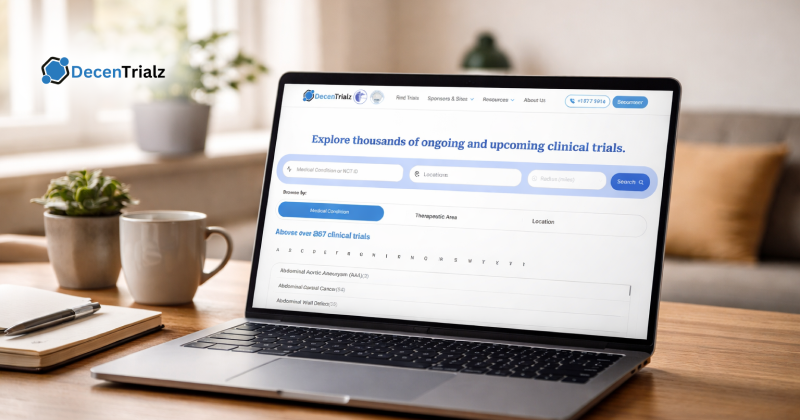
    Some platforms offer an instant match experience, allowing you to review potential studies more quickly while staying in control of your choices. You can explore available trials by condition here.

    Using matching tools can reduce confusion and help you feel more confident about how to choose a clinical trial that fits your needs.

    Questions to Ask Before Choosing a Clinical Trial

    Asking questions is an important part of learning how to choose a clinical trial with confidence. Consider asking:

    • What does participation involve on a day-to-day basis?
    • How often are visits required, and are virtual options available?
    • What support will be provided during the study?
    • Are there any costs, reimbursements, or travel considerations?
    • Can I leave the study at any time if I change my mind?

    Clear answers help you understand expectations and feel more comfortable moving forward.

    How DecenTrialz Helps Participants Find the Right Trial

    DecenTrialz helps participants navigate the process by offering guided discovery, clear study information, and a matching assistant that helps narrow options based on individual needs. The experience is designed to be calm and participant-focused, supporting informed decisions through an easy-to-use instant match process without pressure.

    Get a Personalized Trial Match

    If you are ready to explore studies that may fit your health goals and preferences, you can start with a personalized matching experience here

    For additional learning and guidance, you can explore educational articles at https://decentrialz.com/blog or review trusted participant resources from the National Institutes of Health and the U.S. Food and Drug Administration at your own pace.


  • Technology in Clinical Trials: A Simple Guide to More Convenient Participation

    Technology in Clinical Trials: A Simple Guide to More Convenient Participation

    Technology in clinical trials is changing how participants take part in research, making studies easier to understand, less time-consuming, and more flexible than ever before.

    Many people who explore clinical trials worry about long travel times, frequent hospital visits, complicated paperwork, or fitting study participation into their daily lives. These concerns are common, especially for people balancing work, family responsibilities, or ongoing health needs.

    Today, technology is not meant to make clinical trials harder. Instead, it is designed to reduce effort, improve clarity, and support participants throughout the research journey. From reviewing study information at home to using simple digital tools, modern trials focus on convenience, comfort, and understanding.

    What Does Technology in Clinical Trials Mean for Participants?

    When people hear the term technology in clinical trials, they often imagine complex systems or medical devices. For participants, however, it usually means something much simpler.

    Technology in clinical trials refers to digital tools that help people learn about studies, complete steps more easily, and stay connected with study teams. This may include viewing information online, completing forms digitally, or receiving updates without needing to visit a research site in person.

    The focus is on flexibility and clear communication, using technology that fits naturally into everyday life and allows participants to move forward at their own pace while staying informed and supported throughout the trial.

    How Technology Reduces the Burden of Participation

    One of the biggest benefits of data and technology in clinical trials is how much effort it removes from the participant experience.

    Technology can help by reducing the number of in-person visits, which saves time and travel. Digital forms replace repetitive paperwork, making it easier to complete required steps accurately. Communication tools allow participants to receive reminders, updates, and answers to questions without confusion.

    These changes directly improve the patient experience, making participation feel more manageable and less disruptive. Instead of working around the trial, the trial works around the participant.

    What Is eConsent?

    Rather than signing paper forms during a clinic visit, eConsent allows participants to read consent information online using a phone, tablet, or computer. The information is presented clearly so it can be reviewed carefully.

    How eConsent in Clinical Trials Works?

    eConsent in clinical trials allows participants to go through study details step by step. Participants can take their time, re-read sections, and ask questions before agreeing. This helps ensure understanding before any decision is made.

    Why Virtual eConsent Clinical Trials Are Easier?

    Virtual eConsent clinical trials support choice and clarity. Participants are not rushed and can review information in a comfortable setting. The process emphasizes informed decision-making, helping people feel confident about whether participation is right for them.

    How Wearables Are Used in Clinical Trials?

    Wearables are small devices, such as fitness trackers or sensors, that collect health information during normal daily activities.

    In clinical trials, wearables may be used to gather data like movement patterns, heart rate, or sleep habits. This information is collected passively, meaning participants do not need to manually record anything.

    By using wearables, trials can reduce the need for frequent clinic visits. Participants can continue with their routines while still contributing valuable information to the study.

    Remote Monitoring and Study Apps

    Remote monitoring tools and study apps help participants stay connected without added stress.

    These tools may allow participants to complete remote check-ins, receive reminders for appointments or tasks, and track symptoms through simple questions. Secure messaging features also make it easier to communicate with study teams when questions arise.

    From a participant perspective, these tools exist to guide and support, not to overwhelm. They help keep everything organized in one place, making participation clearer and more convenient.

    Real-World Examples of Technology Making Trials Easier

    Technology in clinical trials often shows up in simple, everyday ways.

    A participant may review consent materials at home instead of during a busy clinic visit. A wearable device may collect health data while the participant goes about daily activities. A study app may send reminders or updates, reducing uncertainty about next steps.

    Some platforms also offer an instant match experience, helping participants discover studies that may fit their basic information more quickly. This can make the early stages of exploration feel faster and less frustrating.

    How Technology Supports a Better Patient Experience

    A positive patient experience is built on clarity, transparency, and support. Technology helps by setting clear expectations from the beginning and reducing surprises during the study.

    Participants can access information easily, understand what is required, and feel supported throughout the process. When communication is consistent and steps are clear, people are better equipped to decide whether and how they want to take part.

    How DecenTrialz Uses Technology to Simplify Clinical Trials

    DecenTrialz uses technology in clinical trials to create a participant-friendly experience through a mobile-friendly platform, clear study information, guided eligibility steps, and faster study discovery using an instant match approach focused on simplicity and understanding.

    How Technology Helps You Explore Clinical Trials with Confidence

    Exploring clinical trials should feel clear and approachable, not confusing or overwhelming. When technology is used thoughtfully, it helps people understand study options, know what to expect, and move forward at a pace that feels right for them.

    Clear study information, guided eligibility steps, and simple digital tools allow participants to explore opportunities with confidence and fewer unknowns. Instead of feeling rushed or uncertain, people can take time to review details, ask questions, and decide what fits their needs.

    If you are interested in seeing how these tools can support your own journey, you can explore available studies by condition and eligibility through this simplified clinical trial discovery experience at DecenTrialz.

  • Clinical Trial Eligibility Explained: A Clear Guide to Inclusion and Exclusion Criteria

    Clinical Trial Eligibility Explained: A Clear Guide to Inclusion and Exclusion Criteria

    Clinical trial eligibility explained in simple terms can help you feel less confused, less anxious, and more confident when exploring research opportunities.

    For many people, understanding clinical trial eligibility is the first step toward deciding whether a study may be right for them.

    If you have ever looked at a clinical trial and wondered whether you qualify, you are not alone. Eligibility criteria can feel complicated or discouraging at first. Many people assume the rules exist to keep them out or that the process is hard to understand.

    In reality, eligibility criteria exist to protect you, ensure fairness, and support safe, high-quality research. Once you understand how eligibility works, the process becomes clearer and easier to navigate.

    What Does Clinical Trial Eligibility Mean for Participants?

    When clinical trial eligibility is explained in plain language, it becomes easier to understand how studies decide who can safely take part.

    Eligibility for a clinical trial is based on guidelines defined before a study begins. These guidelines help ensure that:

    • Participants are protected from unnecessary risk
    • Everyone is evaluated using the same standards
    • Study results are accurate and meaningful

    Eligibility is not a personal judgment. It simply reflects whether your current health information aligns with the needs of that particular study.

    Why Clinical Trials Use Inclusion and Exclusion Criteria

    Having clinical trial eligibility explained upfront helps reduce confusion and prevents unnecessary stress during the application process.

    Every clinical trial follows a detailed research plan reviewed by medical and ethics experts. Inclusion and exclusion criteria help researchers follow that plan correctly.

    Inclusion criteria describe who may take part in a study.
    Exclusion criteria describe who should not take part, usually for safety or scientific reasons.

    If you are not eligible for a study, it does not mean something is wrong with you. It only means that the study is not the right fit for you at that time.

    Inclusion and exclusion criteria are used to:

    • Reduce health risks for participants
    • Prevent avoidable complications
    • Ensure results reflect the right group of people

    Inclusion Criteria Explained in Simple Terms

    Inclusion criteria are the basic requirements you must meet to participate in a clinical trial.

    Common inclusion criteria include:

    • Age range, such as adults over a certain age
    • Specific health condition the study focuses on
    • Previous treatments, such as whether you have taken certain medications
    • Recent test results that fall within study guidelines

    Inclusion criteria and exclusion criteria work together to ensure participants are appropriate for the study and that research findings are reliable.

    Exclusion Criteria Explained Without Medical Jargon

    Exclusion criteria describe situations where participation may not be safe or appropriate.

    Being excluded does not mean you are unhealthy or unsuitable for research.

    You may be excluded if:

    • A health condition could increase risk
    • Another treatment might interfere with study results
    • The study requires a very specific health profile

    Inclusion and exclusion criteria in research are designed to protect participants and maintain the integrity of the study.

    Who Is Eligible for a Clinical Trial?

    There is no single rule for who is eligible for clinical trial participation.

    Eligibility depends on:

    • The condition being studied
    • The phase of the trial
    • Safety considerations
    • The goals of the research

    Someone eligible for one study may not qualify for another. This is normal and expected. Each clinical trial defines its own eligibility requirements.

    How Patient Fit Is Determined Before Enrollment

    Patient fit refers to how closely your health information matches a study’s requirements before enrollment.

    Early checks help:

    • Avoid unnecessary clinic visits
    • Respect your time and effort
    • Reduce frustration later in the process

    Understanding patient fit early allows you to focus only on studies that may be appropriate for you.

    How to Check Your Eligibility Before Applying

    You do not need to guess whether you qualify. The eligibility process begins with a simple form where you share basic information. A registered nurse then reviews your details and follows up with you to confirm accuracy, answer questions, and guide you on next steps. This approach helps reduce confusion and ensures your time is respected.

    Taking this step can make the process feel clearer and more manageable before you decide whether to move forward with a study. 

    This step-by-step approach keeps clinical trial eligibility clearly before any decisions are made.

    You can explore available studies here

    Common Misunderstandings About Eligibility Criteria

    “I was excluded, so I can never join a trial.”
    Eligibility varies by study and can change over time. Being excluded once does not mean you will always be excluded.

    “Eligibility is random.”
    Eligibility rules are defined in advance and applied consistently.

    “Doctors decide arbitrarily.”
    Eligibility decisions follow approved criteria, not personal opinions.

    Understanding clinical trial eligibility  clearly can help remove these concerns.

    Many of these concerns fade once you understand the clinical trial eligibility  in simple terms 

    How DecenTrialz Helps Make Eligibility Clear

    DecenTrialz helps make eligibility easier to understand through a clear, guided experience. You can explore studies, share basic information, and understand what happens next without pressure or confusion. The focus is on transparency, clarity, and respect for your decisions and time.

    Learn more about the mission behind this approach and how participant trust guides every step.

    For additional guidance, explore educational clinical trial resources designed to help you better understand research participation.

    The goal is to keep clinical trial eligibility  transparently so participants know what to expect at every stage.

  • Joining a Clinical Trial: A Clear and Confident Guide to What Participants Can Expect

    Joining a Clinical Trial: A Clear and Confident Guide to What Participants Can Expect

    Joining a clinical trial can feel unfamiliar at first, especially if you have never participated in research before. Many people feel uncertain about what will happen, how long the process takes, or whether it is safe.

    This uncertainty is normal. The good news is that joining a clinical trial follows a clear, structured, and transparent process designed to protect participants at every stage. You are always informed, supported, and free to make choices that feel right for you.

    This guide walks you through the entire journey in simple, reassuring language so you know exactly what to expect.

    For many people, joining a clinical trial is their first interaction with medical research, which is why clarity and transparency matter.

    What Does Joining a Clinical Trial Mean?

    Joining a clinical trial means choosing to take part in medical research that helps doctors and researchers learn more about treatments, medications, or ways to improve care.

    Clinical trials are carefully regulated and always voluntary. Participants are never required to continue if they feel uncomfortable, and safety is monitored throughout the study. You are given clear information before making any decisions and can ask questions at any time. There is no obligation to participate, and choosing not to join does not affect your regular medical care.

    Understanding what joining a clinical trial involves helps participants feel confident and informed before deciding.

    According to educational guidance from the National Institutes of Health, clinical trials follow structured processes designed to protect participants and ensure informed decision-making.

    Step-by-Step Overview of Joining a Clinical Trial

    The steps in clinical trials are designed to help participants feel informed, protected, and respected throughout the process.

    Step 1 – Finding a Trial That May Be Right for You

    Most people begin by searching for trials that match their health condition, location, or personal interest. Trials may be found online, through healthcare providers, or through trusted health communities.

    You can explore clinical trials by condition and basic eligibility details in one clear place, making it easier to understand available options and next steps: https://decentrialz.com/clinical-trials/condition

    first step help you find the right or matching trial for you.

    Step 2 – Eligibility Check and Pre-Screening

    Once you express interest, you may be asked a few basic questions. These often include age, general health information, current medications, or details about your condition.

    Not everyone qualifies for every study, and that is intentional. Eligibility checks protect participants and ensure the study is appropriate and safe for those involved.

    If a study is not a match, you are informed clearly and respectfully, and you may be guided toward other opportunities.

    Step 3 – Reviewing Study Information and Consent

    Before any testing or participation begins, you receive detailed information about the study. This includes what the study involves, how long it may last, possible risks, and your rights as a participant.

    This process is called informed consent. You are encouraged to take your time, ask questions, and discuss the information with family or trusted advisors if you wish.

    Agreeing to review the information does not mean you are required to participate.

    Step 4 – Screening Visits

    If you decide to move forward, screening visits may be scheduled. These visits can include health checks, lab tests, questionnaires, or conversations with study staff.

    Screening helps confirm whether the study is a good fit for you. It is important to know that screening does not guarantee enrollment, and being screened out is a normal part of clinical research.

    Step 5 – Enrollment or Next Steps

    If you meet all the study requirements, you may be officially enrolled. The research team will explain what happens next, including visits, follow-ups, and expectations.

    If you are not eligible, the decision is shared respectfully, and your time and interest are always valued. Transparency is a key part of joining a clinical trial.

    How Long Does It Take to Join a Clinical Trial?

    The timeline for joining a clinical trial varies from study to study. Some participants move through the process quickly, while others may experience longer timelines due to additional screening steps or scheduling needs.

    Delays often occur to ensure accuracy, safety, and proper review. Understanding this can help reduce anxiety and set realistic expectations.

    The time required for joining a clinical trial depends on screening steps, study design, and participant availability.

    Understanding the Patient Experience in Clinical Trials

    A positive patient experience in clinical trials is built on clear communication and ongoing support. Participants typically receive regular updates, have a clear point of contact, and are informed about what happens at each stage.

    Privacy and data protection are taken seriously, and personal information is handled securely. Participants are supported throughout the process, from the first conversation to the final follow-up.

    A positive experience while joining a clinical trial depends on communication, respect, and ongoing support.

    Common Questions Participants Have Before Joining

    Is it safe?
    Clinical trials follow strict safety guidelines and are reviewed by ethics committees before they begin.

    The U.S. Food and Drug Administration provides clear guidance on participant protections, safety monitoring, and informed consent in clinical trials.

    Can I leave the study?
    Yes. Participation is voluntary, and you can withdraw at any time.

    Will I be paid?
    Some studies offer compensation. Details are explained before you decide.

    Who do I talk to if I have questions?
    You will always have access to a study contact or nurse for support.

    How DecenTrialz Supports a Clear and Guided Participant Experience

    DecenTrialz is designed to make each step of joining a clinical trial easier to understand and less overwhelming for participants. The focus is on clarity, communication, and respect for individual choice throughout the process.

    Only basic information needed for initial pre-screening is collected, helping participants move forward without unnecessary complexity. Registered nurses follow up with participants to clearly explain study requirements in plain language and answer questions before any decisions are made.

    Participants are informed about what the next step may be before moving forward, so there are no surprises. When applicable, guidance is provided through the informed consent process to ensure participants understand their options and rights.

    Clear status updates are shared during pre-screening and referral, helping participants know where they stand at every stage of the journey.

    Learn more about DecenTrialz here:
    https://decentrialz.com/about-us

    Find a Trial That Fits You

    If you are considering participation or simply want to explore options, you can take the next step at your own pace.

    Find a Trial That Fits You
    https://decentrialz.com/clinical-trials/condition

  • World AIDS Day 2025: Awareness, Remembrance, and Hope for a Stronger Future

    World AIDS Day 2025: Awareness, Remembrance, and Hope for a Stronger Future

    World AIDS Day 2025 is a moment for people across the world to pause, reflect, and stand in solidarity with everyone affected by HIV. Observed on December 1, the day is not about celebration. Instead, it serves as a reminder of compassion, awareness, and the ongoing need for action. Some may still come across phrases like “Happy World AIDS Day,” but the intention behind them is usually to send strength and hope. This day encourages learning, reduces stigma, and reminds us that while HIV remains a global challenge, progress and resilience continue to shape a better future.

    For those who are learning for the first time and wonder what is AIDS Day, it is the world’s first global health awareness day created to bring attention to the impact of HIV and AIDS, support those living with the condition, and remember the millions of lives lost. The day encourages open conversations, reduces stigma, and reminds the world that HIV is still a reality, but so is progress.

    World AIDS Day 2025 Theme: Overcoming Disruption, Transforming the AIDS Response

    In 2025, the World Health Organization (WHO) released the theme “Overcoming disruption, transforming the AIDS response.” As shared on the official WHO page the world stands at a critical moment. Many communities face disrupted HIV services and rising vulnerabilities. Years of progress risk slowing down if strong action is not taken.

    WHO highlights the need for sustained political leadership, international cooperation, and human rights centered approaches. UNAIDS also stresses the impact of inequalities and the importance of rebuilding stronger and fairer health systems.

    The 2025 theme encourages the world to rebuild systems that have been disrupted and to transform the HIV response into one that is stronger, more inclusive, and more resilient.

    What Is AIDS Day?

    For many people, asking what is AIDS Day is a way of seeking clarity about why this day still matters. World AIDS Day was established in 1988 to increase awareness, expand education, support those living with HIV, and challenge stigma. It encourages individuals, communities, healthcare workers, and governments to share accurate information and promote prevention and testing.

    It is a day to learn, reflect, and support. It reminds the world that HIV can affect anyone, and that understanding and empathy play a key role in creating healthier communities.

    Why Is World AIDS Day Important?

    Understanding why World AIDS Day is important means looking at both progress and ongoing challenges. Today, HIV treatment allows people to live long and healthy lives. Prevention tools such as PrEP are widely available. Testing has become easier and more accessible. Scientific research continues to move forward.

    Yet, the world still faces challenges.

    • Many people do not know their HIV status
    • Stigma and discrimination stop people from seeking care
    • Access to treatment is unequal in many regions
    • HIV services are disrupted in countries facing conflict or economic instability
    • Research needs consistent investment and support

    This is why AIDS awareness day continues to be meaningful every year. It keeps HIV in public conversation in a way that encourages compassion instead of fear. The 2025 theme highlights the need to overcome disruptions and build stronger responses for everyone, especially for communities that are often left behind.

    A Story of Hope: Timothy Ray Brown, the First Person Cured of HIV

    One of the most inspiring stories connected to World AIDS Day is that of Timothy Ray Brown, also known as the “Berlin Patient.” His experience changed the world’s understanding of what may be possible for HIV treatment.

    Timothy was diagnosed with HIV in the 1990s. Years later, he was diagnosed with acute myeloid leukemia, a life threatening cancer. During his treatment, his medical team chose a stem cell donor with a rare genetic mutation known as CCR5 delta 32, which makes certain immune cells naturally resistant to HIV.

    The procedure was extremely difficult. Timothy went through two stem cell transplants and faced severe complications. However, a remarkable outcome followed. HIV disappeared from his body. He stopped taking HIV medication, and the virus did not return.

    Timothy became the first person in history cured of HIV.

    He later chose to reveal his identity publicly so people around the world could feel hope. His courage encouraged many researchers to continue exploring cure related strategies. His journey inspired new scientific studies and gave people living with HIV a powerful message that progress is possible. Timothy passed away in 2020 from leukemia complications, not from HIV, but his legacy remains one of the strongest symbols of hope and resilience.

    World AIDS Day 2025: Moving Forward Together

    The 2025 theme invites the world to rebuild what has been disrupted and transform the HIV response into something stronger and more inclusive. To move forward, global efforts must continue to focus on:

    • Accessible testing
    • Wider access to HIV treatment
    • Prevention tools such as PrEP
    • Education that reduces myths and misinformation
    • Cure focused research inspired by stories like Timothy’s
    • Support systems that protect dignity and human rights

    By reducing inequalities and strengthening cooperation, the global community can move closer to the shared goal of ending AIDS by 2030.

    Standing Together

    Whether you are joining this conversation for the first time or have supported HIV awareness efforts for many years, your presence matters. AIDS awareness day is a reminder that hope grows stronger when people stand together, learn together, and support one another.

    World AIDS Day 2025 encourages us to look at the challenges honestly and respond with empathy, science, and unity. As we reflect on the lives affected by HIV and honor individuals like Timothy Ray Brown, we remember that change is possible and that every small step helps move the world toward a healthier future.

    Ending AIDS is a global effort, and together, we can make it a reality.

  • A Patient and Caregiver’s Guide to Understanding Clinical Trials

    A Patient and Caregiver’s Guide to Understanding Clinical Trials

    For many families, the idea of joining a clinical trial begins with questions: What does a trial involve? How will it affect daily life? What role does a caregiver play? These are not simple questions, and the answers often carry weight for both patients and those who support them.

    This guide clinical trials patients aims to simplify the journey, explaining the basics of how trials work, what caregivers should know, and the key questions families should ask before making decisions. With the right information, patients and caregivers can feel more confident and supported as they navigate this important path.

    Understanding Trials: Trial Basics Explained

    At their core, clinical trials are carefully designed studies that test new treatments, medical devices, or procedures. They follow strict scientific and ethical standards to ensure participant safety and produce reliable results.

    Trials are often grouped into phases:

    • Phase I: Small groups test safety and dosage.
    • Phase II: Larger groups look at effectiveness and side effects.
    • Phase III: Broad testing compares the new approach against existing standards.
    • Phase IV: Post-approval monitoring continues after treatments reach the market.

    Understanding these basics helps families know what stage of research they are entering. It also highlights why trials are so critical. Every new medicine or therapy must pass through these stages before becoming available to the public. To learn more, explore our Clinical Trials Simplified guide.

    The Caregiver Role in Trials

    When patients enroll in a trial, they rarely do it alone. Caregivers such as spouses, parents, adult children, or close friends often play a central role.

    The caregiver role in trials includes:

    • Helping with logistics like transportation and appointment scheduling.
    • Supporting adherence to medications, diaries, or digital tools required by the study.
    • Offering emotional encouragement during both hopeful and challenging moments.
    • Acting as an advocate, asking questions and voicing concerns during study visits.

    Caregivers are not just bystanders. They are partners in the process, often helping patients stay engaged and supported throughout the study.

    Key Questions Families Should Ask

    Before deciding to participate, patients and caregivers should gather as much information as possible. Some key questions include:

    • What is the purpose of this trial?
      Understanding the goals helps align expectations.
    • What are the potential risks and benefits?
      Every trial involves its own potential benefits and risks, and understanding both is essential for informed decision-making.
    • How will participation affect daily life?
      From travel requirements to medication schedules.
    • What costs are covered, and is compensation provided? Financial clarity prevents surprises.
    • Can we withdraw at any time?
      The answer is always yes, but it is important to hear it directly.

    These questions are not just for patients. Caregivers should feel empowered to ask them too, since their support and insight are essential to the overall experience.

    Tools That Support Decision-Making

    Deciding whether to join a trial can feel overwhelming. Thankfully, families now have more resources than ever.

    • Educational guides provide trial basics explained in clear, plain language.
    • Decision support tools help weigh personal goals, values, and health priorities.
    • Digital platforms offer access to trial listings tailored to health profiles and locations.

    Caregivers can use platforms like DecenTrialz to explore transparent trial information that supports easier, more informed decision-making for families.

    Supporting Each Other Through the Journey

    Enrolling in a trial is not only a medical decision but also an emotional journey. Patients may feel hopeful, anxious, or uncertain, while caregivers may balance optimism with concern. The best outcomes often come when families work together, openly sharing questions and feelings along the way.

    Tips for patients:

    • Keep a journal of symptoms, appointments, and questions.
    • Be open with caregivers about your needs and worries.
    • Take time to rest and recharge during demanding schedules.

    Tips for caregivers:

    • Stay organized with calendars and reminders for visits or medications.
    • Remember to care for your own health and emotional well-being.
    • Seek support from other caregivers who understand the experience.

    By supporting each other, both patients and caregivers create a stronger foundation for navigating trials with confidence.

    Shaping a Better Future Together

    The future of clinical trials is moving toward greater accessibility and inclusivity. As more studies adopt hybrid or decentralized elements, participation may involve fewer site visits, more digital tools, and better support for families.

    For patients, this means easier access to promising treatments. For caregivers, it means a clearer role in supporting participation while balancing daily life. For both, it signals progress toward a trial system that recognizes the importance of family involvement.

    Navigating clinical trials can be daunting, but patients and caregivers do not have to face the journey alone. With the right education, supportive questions, and decision tools, families can make choices that feel informed and empowering.

    This guide to clinical trials patients is only the beginning. The real journey begins when patients and caregivers walk side by side into a trial, not just as participants and supporters, but as partners shaping the future of healthcare together.

  • Data Privacy in Clinical Trials: How AI Supports Secure Research

    Data Privacy in Clinical Trials: How AI Supports Secure Research

    Imagine sharing your health story, your diagnosis, treatments, and lab results, so that one day someone else might live a healthier life because of what doctors learn from you. That is what happens when people join clinical trials. It is an act of hope, generosity, and trust.

    But trust does not come automatically. People open up only when they believe their information will stay safe and private.

    Now, with artificial intelligence becoming a bigger part of research, that trust matters more than ever. AI in Clinical Trials is helping researchers find participants faster, uncover insights sooner, and improve outcomes in ways we could not before. Yet it also depends on one vital promise: your personal data must stay protected, always.

    Let us look at what privacy really means in an AI-powered world and how research can stay both smart and safe.

    Privacy Is Personal

    Every bit of data in a clinical trial represents someone’s story, a mother managing heart disease, a teenager living with diabetes, a veteran battling pain. Behind every statistic is a person who has chosen to help science move forward.

    Protecting that data means protecting their dignity. Privacy is not about locking information away; it is about handling it with respect. When people feel safe sharing their stories, research moves faster, and everyone benefits.

    Privacy, at its heart, is about people, not paperwork.

    The Rules That Keep Information Safe

    Clinical research already follows strict laws designed to protect patients everywhere.

    In the United States, HIPAA requires that health data be stored securely and shared only with permission. It limits access, mandates encryption, and gives people rights over their own medical information.

    In Europe, GDPR adds even more safeguards. It lets participants see what data has been collected, correct mistakes, or request deletion entirely.

    Similar protections exist worldwide, including Canada’s PIPEDA and California’s CCPA, all focused on the same principle: people should control how their personal health information is used.

    How AI Changes the Conversation

    AI has completely reshaped how clinical trials operate. It can scan through thousands of medical records to find eligible participants, detect safety risks faster, and even predict outcomes before a trial finishes.

    But that power also means more responsibility.

    • AI needs a lot of data. The more information it has, the smarter it becomes, and that data must be stored and used securely.
    • Even anonymous data can reveal identities. With enough details, AI might accidentally recognize someone, which is why careful de-identification is crucial.
    • Transparency matters. If AI helps decide who qualifies for a study, researchers must explain how those decisions are made.

    AI does not replace human ethics; it challenges us to be even more ethical.

    The Tools That Protect Patient Privacy

    Every trial collects sensitive details such as test results, doctor notes, or wearable device readings. None of it should ever be visible to unauthorized eyes.

    The first line of defense is encryption. It locks data so that only trusted systems can open it.

    The next is de-identification, which removes personal details like names, addresses, and birth dates. So instead of “John, 52, Chicago,” the AI sees “Participant 1027.” The person stays invisible, but their experience still helps advance science.

    It is how researchers honor both progress and privacy at the same time.

    Building Privacy Into the Design

    Good privacy does not happen by accident. It starts with design.

    Developers and research teams now follow a principle called Privacy by Design, which means thinking about protection from the very beginning.

    That includes:

    • Giving data access only to verified users
    • Tracking every action taken on a dataset
    • Testing algorithms for fairness and bias
    • Limiting collection to only the information needed for the study

    When privacy is built into the foundation, it does not slow progress, it strengthens it.

    Why Human Oversight Still Matters

    AI can process data faster than any person, but it does not have empathy, context, or moral judgment. That is why people will always play the most important role in clinical research.

    Researchers make sure data is used correctly. Coordinators explain consent clearly. Participants stay in control of their information.

    Human oversight ensures that privacy is not just a checkbox, it is a living value guiding every decision.

    How DecenTrialz Keeps Data Safe

    At DecenTrialz, privacy is not an add-on. It is at the heart of everything.

    Here is how we protect participant information every day:

    • Encryption: Data is secured both in storage and in transit.
    • De-identification: Personal details are removed before analysis.
    • Access Control: Only verified researchers and authorized staff can view sensitive information.
    • Compliance: Every feature aligns with HIPAA, GDPR, and ISO 27001 standards.
    • Transparency: AI insights are explainable, traceable, and ethically monitored.

    DecenTrialz combines advanced AI with strong human ethics so innovation never comes at the expense of trust.

    The Future: Innovation With Integrity

    Technology will keep evolving, and so will privacy protections.

    New methods like federated learning let AI learn from data stored in different places without moving it anywhere. Differential privacy adds small, random variations to datasets so individual identities can never be pinpointed.

    These tools prove that privacy and progress do not have to compete, they can work together beautifully.

    The future of AI-powered research is one where every breakthrough is built on respect for the people who made it possible.

    AI is making clinical trials faster, smarter, and more inclusive, but technology alone is not what makes research strong. Trust does.

    Every piece of data represents someone’s courage to share their story. Protecting that story is not just a legal duty; it is a moral one.

    When privacy and innovation go hand in hand, science becomes something everyone can believe in.

    At DecenTrialz, that is the kind of future we are building, one where technology serves people, not the other way around.

    Because real progress starts with protecting the people behind the data.

  • Myths vs Reality: The Truth About AI in Clinical Trials

    Myths vs Reality: The Truth About AI in Clinical Trials

    AI in Clinical Trials is reshaping the future of medical research. For decades, clinical studies have been the heartbeat of medical progress, yet the process has remained slow, expensive, and buried in paperwork. Today, Artificial Intelligence (AI) is stepping in to transform how we design, recruit, and manage studies with greater accuracy and speed.

    But with this transformation comes a swirl of myths. Many worry that AI will “replace humans,” make trials less personal, or even introduce bias. The truth? AI isn’t replacing the human touch; it’s helping the people behind the science do their jobs better.

    Let’s break down the most common myths and uncover the real story behind AI in clinical research.

    Myth #1: “AI will take over and replace human researchers.”

    Reality: AI isn’t taking over, it’s teaming up.

    Think of AI as a highly skilled assistant, not a replacement for human judgment. It helps researchers process massive volumes of data faster, identify patterns, and flag potential risks, but the final decisions still come from human experts.

    At one mid-sized oncology research site in Boston, the team was struggling to keep up with eligibility checks for new participants, reviewing hundreds of EHRs (Electronic Health Records) each week. After integrating an AI-based pre-screening tool, what used to take three days now takes just a few hours.

    Did the system replace the staff? Not at all. It freed them to focus on conversations with patients, physician outreach, and protocol planning, the things that require human empathy and understanding.

    AI brings efficiency; people bring context and compassion. Together, they form the perfect partnership.

    Myth #2: “AI makes clinical trials less personal.”

    Reality: It actually helps make trials more patient-centered.

    One of the biggest challenges in clinical research has always been patient recruitment. Many participants drop out not because of the science, but because they feel disconnected or overwhelmed.

    AI-driven tools can change that. They help match patients to trials that truly fit their medical and personal needs, analyze social determinants (like transportation or distance to sites), and even personalize communication timing, ensuring that participants feel understood, not just enrolled.

    Imagine Sarah, a 52-year-old living in rural Ohio, who struggled to find a trial for her rare autoimmune condition. Traditional outreach never reached her town. But when a local site started using an AI-driven recruitment platform, Sarah got a text about a study nearby that matched her health profile. She joined and later said it felt like “someone finally saw me.”

    That’s what AI can do: make research more human by helping us see every individual who might benefit.

    Myth #3: “AI introduces more bias into clinical research.”

    Reality: AI can actually reduce bias when used responsibly.

    It’s true that if AI systems are trained on biased data, they can perpetuate inequalities. But the clinical research community is already addressing this by setting strict data standards and transparency protocols.

    Today, AI models used in healthcare must undergo validation, bias testing, and regulatory oversight. Many platforms, including DecenTrialz and others leading the movement, prioritize ethical AI frameworks aligned with HIPAA, GDPR, and FDA guidance.

    Used properly, AI can highlight underrepresented populations, uncover gaps in recruitment diversity, and help ensure that trial outcomes reflect everyone, not just the majority group.

    In other words, AI isn’t the problem; it’s part of the solution.

    Myth #4: “AI is too complex and expensive for smaller sites.”

    Reality: Cloud-based and modular AI tools are now more accessible than ever.

    A few years ago, AI systems were costly and required in-house data teams. But today, SaaS-based AI platforms can integrate directly with existing clinical trial management systems (CTMS), electronic data capture (EDC) tools, or even spreadsheets.

    At a small research site in Texas, a team of five staff members struggled to track follow-ups and reminders for participants. By adopting a lightweight AI assistant that automated communication, they reduced missed appointments by 40 percent without hiring extra help or buying complex software.

    Small sites are discovering that AI doesn’t have to mean “high tech.” It can mean “smart tech that fits your workflow.”

    Myth #5: “AI can predict everything about a trial.”

    Reality: AI is powerful, but it’s not magic.

    AI helps forecast potential recruitment bottlenecks, estimate patient drop-off rates, and even detect early safety signals. But it can’t guarantee outcomes.

    Just as weather forecasts rely on models, so does AI in clinical trials. The more quality data it has, the better the predictions. But unexpected human behaviors, regulatory changes, or new medical discoveries can still shift the picture.

    Think of AI as a GPS for research. It helps you navigate smarter, but the driver’s still in control.

    Why the “Reality” Matters

    Every myth about AI usually stems from one thing: fear of change. But clinical research has always evolved. From paper CRFs to eConsent, from local data silos to global cloud sharing, every leap has made trials safer, faster, and more inclusive.

    AI is simply the next chapter. It’s about working smarter, not harder. It’s about giving researchers more time for science and patients more chances at hope.

    And when implemented transparently, ethically, and collaboratively, AI has the potential to make clinical trials more inclusive, efficient, and humane than ever before.

    The Future of AI in Trials: Collaboration, Not Replacement

    The future isn’t “AI vs Humans.” It’s “AI + Humans.”

    Platforms like DecenTrialz are helping make that collaboration real, connecting research teams, sites, and participants seamlessly. From matching diverse patients to the right trials to automating data capture and monitoring, the goal isn’t to replace people; it’s to empower them.

    When technology supports empathy, innovation, and inclusion, everyone wins, sponsors, sites, and most importantly, patients.

    AI in clinical trials isn’t a myth; it’s a movement.

    The real story isn’t about algorithms taking over, but about people working smarter, faster, and more compassionately with AI by their side.

    As Sarah’s story in Ohio reminds us, the future of research is both intelligent and human. And that’s the truth we can all get behind.

  • Patient Privacy in the Digital Age: Safeguarding Data in Research

    Patient Privacy in the Digital Age: Safeguarding Data in Research

    When you think about joining a clinical trial, one of the first questions that comes to mind is, “What happens to my personal information?”
    It’s a fair question, and an important one. In a world where everything from shopping to medical records lives online, patient data privacy has become one of the most critical parts of clinical research.

    Modern trials collect an incredible amount of data, lab results, genetic information, digital health readings, even data from wearable devices. Protecting that information is not only required by law but also essential to building the trust that keeps research moving forward.

    Why Protecting Data Matters

    Every person who joins a clinical trial brings more than just their time; they share their personal health information, sometimes deeply private details. That trust deserves serious protection.

    Breaches or misuse of medical data can lead to loss of confidence, fear, and hesitation to participate in future research. For sponsors, researchers, and CROs, protecting that trust is just as important as testing a new therapy.
    When participants feel confident that their information is safe, they’re more likely to engage openly and stay through the full course of the trial.

    Data privacy, in this sense, isn’t just about security, it’s about respect.

    What Laws and Standards Protect You

    Across the world, several strong privacy frameworks are in place to protect research participants. In the United States, the Health Insurance Portability and Accountability Act (HIPAA) sets strict guidelines for how patient data is stored, shared, and accessed. HIPAA ensures that personal health information cannot be used or disclosed without your permission, except under very specific research safeguards.

    Other regions follow similar standards, such as the GDPR in Europe or the PIPEDA framework in Canada. These rules share the same goal: to protect individual rights while allowing ethical medical research to continue.

    For participants, these standards mean you have control over your data, you can ask how it’s used, where it’s stored, and who has access to it.

    Before joining any study, you’ll review and sign an informed consent form. That document explains exactly what data will be collected, how it will be protected, and what rights you have throughout the process. Always take the time to read it carefully and ask questions if anything feels unclear.

    How Digital Tools Keep Data Secure

    Technology has changed how clinical research is conducted, and also how privacy is maintained. The same innovations that allow remote monitoring, wearable tracking, and decentralized studies also bring advanced ways to keep data safe.

    Here’s how researchers are protecting your information in today’s digital environment:

    • Encryption: All patient information is encrypted, which means it’s converted into secure code that can only be unlocked by authorized systems or personnel.
    • Access controls: Only approved research staff can access identifiable information, and every login or data view is logged and tracked.
    • De-identification: Your personal details are often separated from the data itself, so the information used for analysis can’t be traced back to you.
    • Secure platforms: Trusted research systems use firewalls, multi-factor authentication, and continuous security audits to detect and prevent unauthorized access.

    Even in virtual or hybrid trials, data flows through encrypted, compliant systems, whether you’re completing surveys on a phone app or syncing data from a smartwatch.

    Building Patient Trust Through Transparency

    Technology and laws are powerful, but the most important ingredient in protecting privacy is trust. Participants need to know that research teams are not only following the rules but also communicating clearly.

    That’s why many clinical trial organizations now include participants in conversations about data management. Researchers explain what’s being collected, how long it will be stored, and whether it might be used for future studies.

    When participants see that transparency, it builds confidence, and that confidence drives the success of every clinical trial.

    Platforms like DecenTrialz help strengthen this relationship by providing patients with access to clear, easy-to-understand information about ongoing trials. Participants can explore opportunities safely, knowing that every listing follows privacy and security standards aligned with HIPAA and international guidelines.

    What You Can Do to Protect Yourself

    While clinical research organizations have strong systems in place, participants can take a few steps to stay informed and empowered:

    1. Ask questions early. Before enrolling, ask the study coordinator how your information will be stored and who can see it.
    2. Keep copies. Hold onto your consent documents and privacy notices for reference.
    3. Check legitimacy. Only join studies listed on verified platforms or official registries.
    4. Stay updated. If a study changes how it handles data, you have the right to be informed and to withdraw if you’re uncomfortable.

    You have more control than you might realize. Good research teams appreciate questions about privacy, it shows you care about your rights and understand your role in the study.

    Balancing Innovation and Protection

    As clinical trials become more digital, the balance between innovation and protection becomes even more important. Data helps researchers detect side effects faster, measure outcomes more accurately, and personalize treatments to each participant’s unique biology.

    But that progress should never come at the cost of privacy. The future of research depends on systems that use technology to protect participants, not expose them.

    When participants know that their information is handled responsibly, it strengthens the bond between people and science. And that trust helps research move forward faster, for everyone’s benefit.

    Clinical research has entered a digital age, but the human element remains at the center. Protecting your personal information isn’t just a legal requirement, it’s an ethical promise.

    Every researcher, sponsor, and CRO is responsible for upholding that promise through transparent communication, modern security tools, and full respect for each participant’s privacy.

    When you choose to take part in a trial, you’re contributing to the future of medicine. You deserve the peace of mind that comes with knowing your data, and your dignity,  are protected at every step.

  • How to Find and Enroll in a Clinical Trial: A Step-by-Step Guide

    How to Find and Enroll in a Clinical Trial: A Step-by-Step Guide

    Find clinical trials near you with this simple participant’s guide. Clinical studies are the bridge between medical discovery and real-world healthcare, relying on volunteers who step forward to test new treatments, devices, or approaches.
    Whether you are seeking innovative options, want to contribute to medical progress, or are simply curious about opportunities in your area, this guide will help you take the right steps with clarity and confidence.

    Step 1: Understand What a Clinical Study Is

    A clinical study is a structured research process where new medical approaches are tested to see if they are safe and effective. Before any treatment or device can become widely available, it must pass through carefully monitored trial phases.
    Types of studies include:

    • Treatment studies: Test new drugs, devices, or therapies.
    • Prevention studies: Explore ways to reduce the risk of illness.
    • Diagnostic studies: Develop better tools for early detection.
    • Quality-of-life studies: Improve daily living for people with long-term conditions.

    Every study is guided by strict ethical standards and overseen by independent review boards to protect participants’ rights and safety.

    Step 2: Use Trusted Clinical Study Finders

    Finding the right clinical study is easier when you use a reliable platform. DecenTrialz is built to make this process simple, clear, and participant-friendly. Instead of navigating complicated listings, you can search based on your health profile and location, explore opportunities tailored to you, and feel confident that your privacy is protected.
    With DecenTrialz, all the essential trial information is organized in one place, giving you a smoother experience and helping you focus on studies that truly matter to you.

    Step 3: Review Eligibility Criteria

    Every study has requirements called inclusion and exclusion criteria. These rules make sure participants are safe and that results remain reliable.
    Common criteria include:

    • Age range (for example, 18 to 65)
    • Gender or biological factors
    • Stage of your condition
    • Current medications and medical history
    • Lifestyle considerations such as pregnancy or smoking habits

    Some platforms, including DecenTrialz, provide quick questionnaires to help you check if you might qualify before reaching out to the research team.

    Step 4: Contact the Study Coordinator

    Once you find a study that looks suitable, the next step is contacting the study coordinator listed in the details. This person will be your main point of contact.
    Helpful questions to ask include:

    • What is the purpose of this study?
    • How long will participation last?
    • Where will the visits take place?
    • Are there any costs or is compensation provided?
    • What if I change my mind later?

    The coordinator’s role is to answer your questions and ensure you feel fully informed.

    Step 5: Attend Screening Visits

    Before you can officially enroll, most studies require screening visits to confirm eligibility.
    Screening may include:

    • A review of your medical history
    • A physical exam
    • Blood tests or imaging scans
    • Health and lifestyle questionnaires

    These checks confirm whether the study is right for you and give you more time to decide if participation feels right.

    Step 6: Understand Informed Consent

    Informed consent is a key step in learning how to join a clinical study. It ensures you fully understand the study before agreeing to take part.
    The research team will explain:

    • The purpose of the study
    • Procedures involved
    • Possible risks and benefits
    • Your rights and responsibilities

    You always have the right to review the information carefully, ask questions, and decline if you are not comfortable. Even after signing, you can withdraw from the study at any time without penalty.

    Step 7: Begin Participation with Support

    Once you are enrolled, you will follow the schedule provided by the study team. This might include visits, check-ins, or digital monitoring.
    During the study, you may:

    • Receive the study treatment or a comparison option
    • Have your health monitored closely
    • Share feedback through questionnaires or diaries

    Stay connected with your research team. They are there to support you and ensure your participation is safe and positive.

    Extra Tips for Success

    • Stay open-minded: Clinical studies may involve new routines, not just new treatments.
    • Explore multiple opportunities: Different studies may be a better fit at different times.
    • Join a registry: Adding your name to a volunteer list means you may hear about more studies.
    • Stay organized: Keep notes about trials you have contacted and their requirements.

    The Value of Taking the First Step

    Joining a clinical study may feel like a big decision, but taking the first step is often the hardest part. By exploring your options, asking questions, and using tools like DecenTrialz to simplify the process, you are already moving closer to opportunities that could make a difference in your health and in the lives of others.

    Understanding how to join a clinical study step by step makes the process less intimidating and far more empowering. From learning what clinical studies are, to using platforms like DecenTrialz to find opportunities, reviewing eligibility, and completing informed consent, each stage is designed to help you make confident choices.

    By joining, you are not only exploring new possibilities for yourself but also contributing to research that could benefit many others in the future.